Landscape Vision Guide
The Cottage Garden
A property in Ontario
Cottage Landscape Restoration · Spring 2026

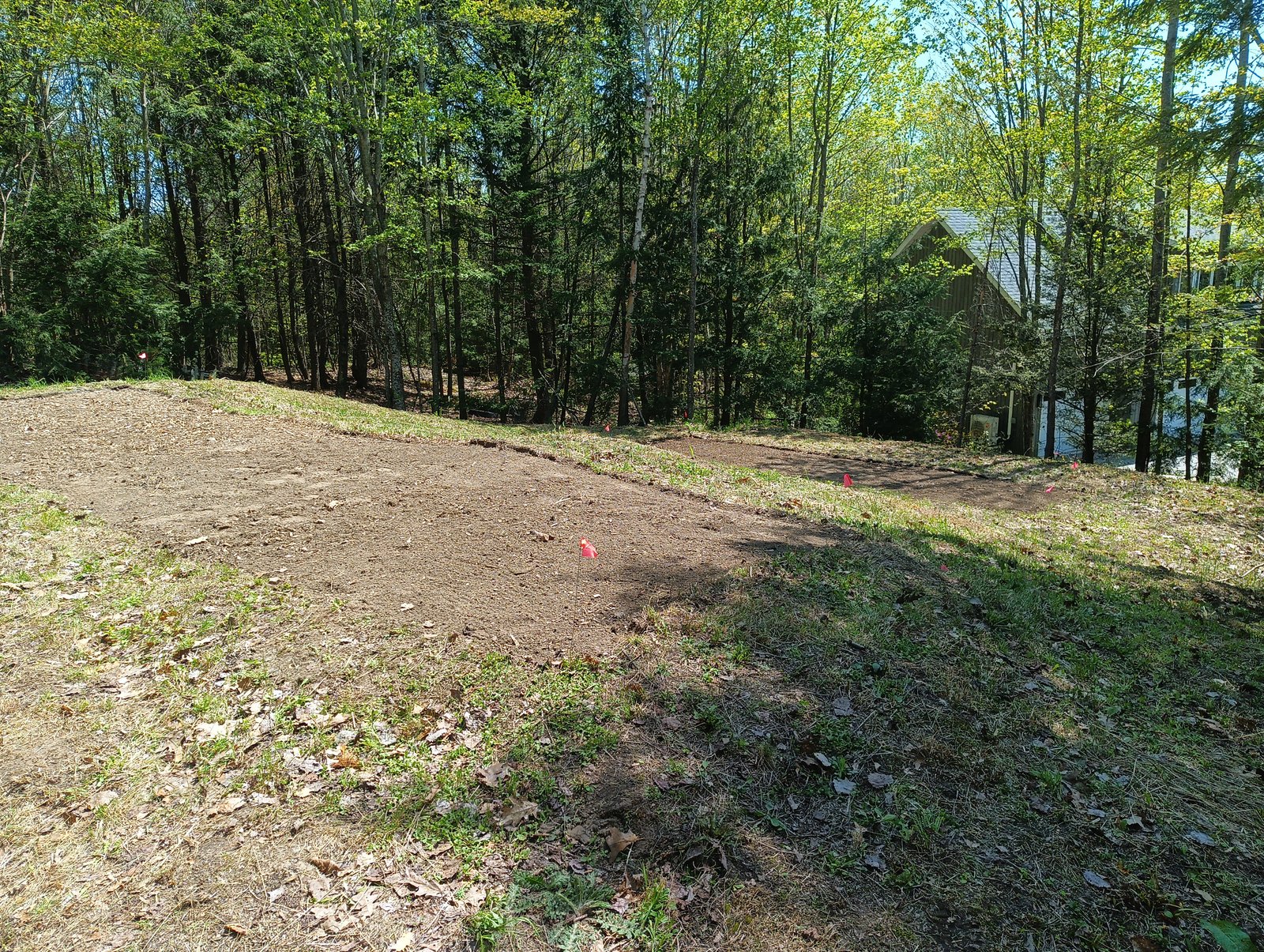
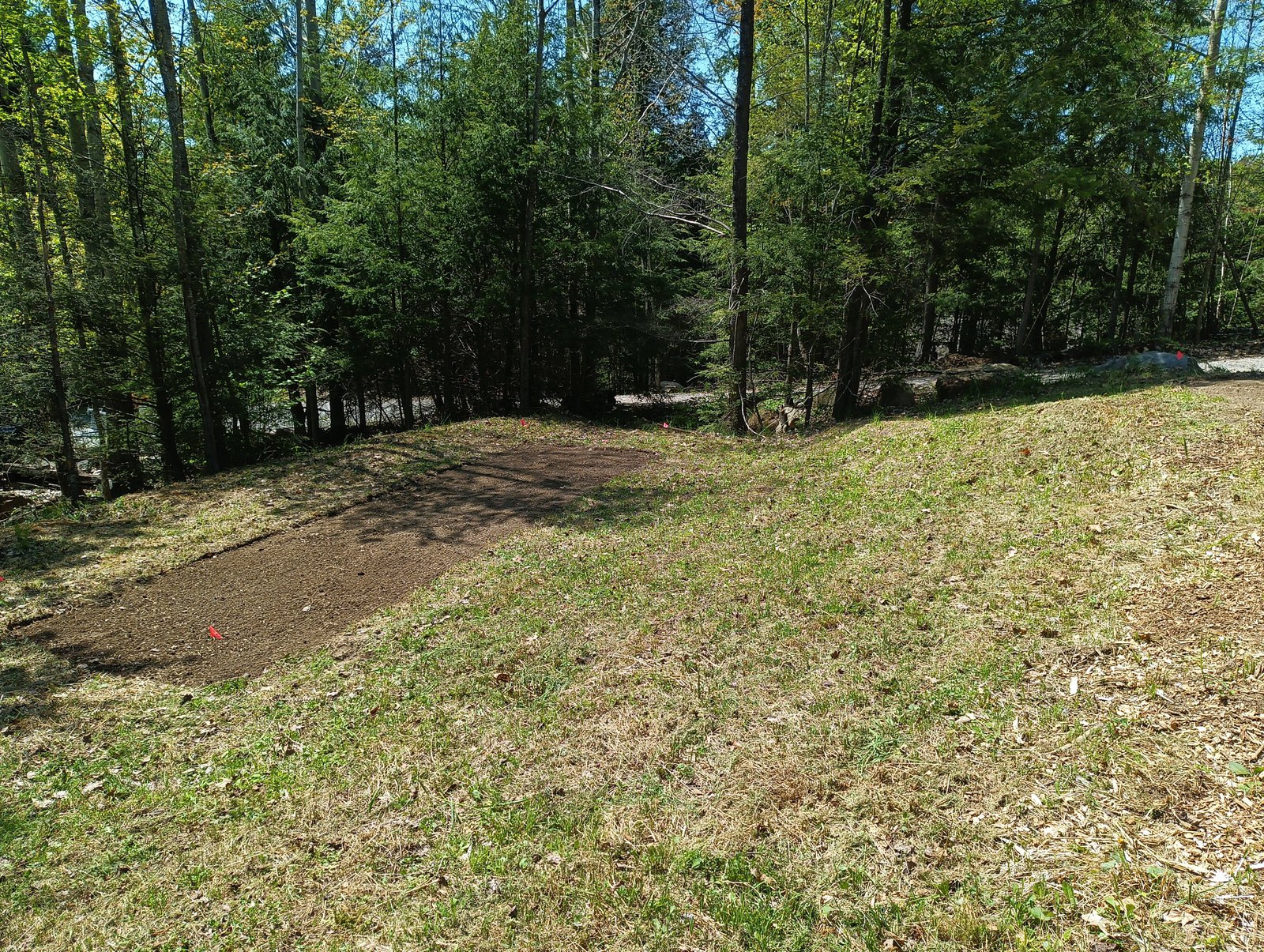
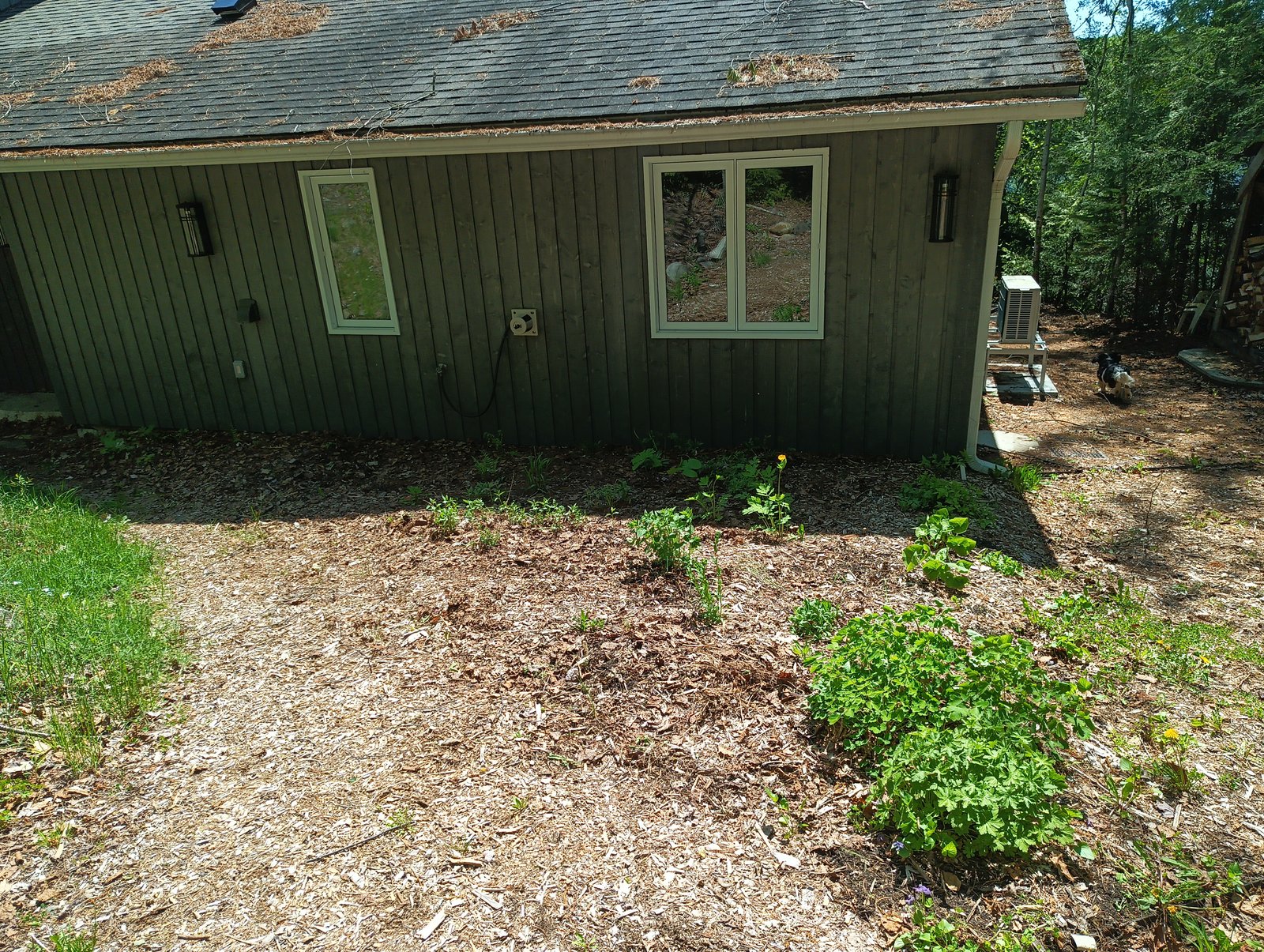 Before
 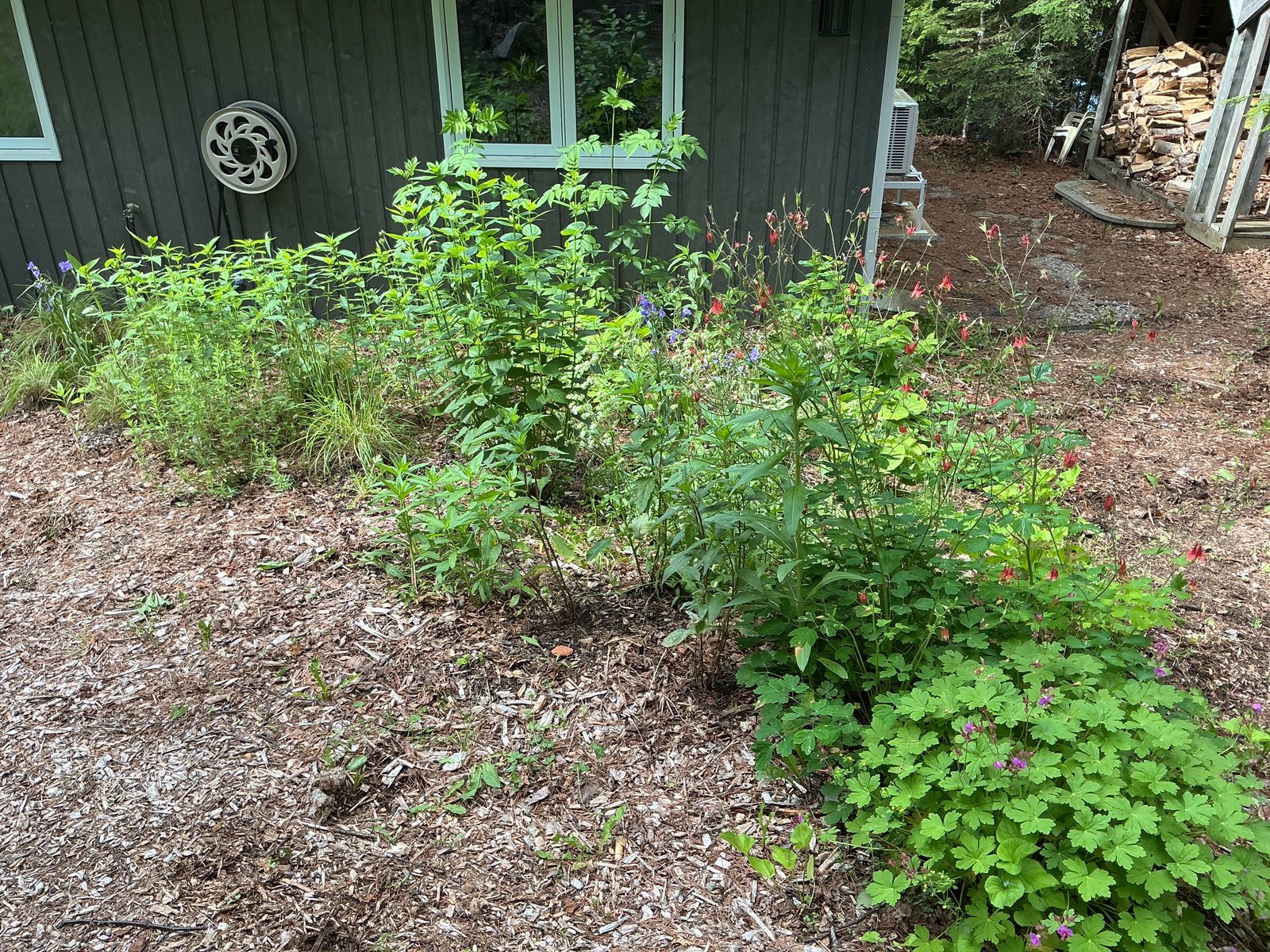 After
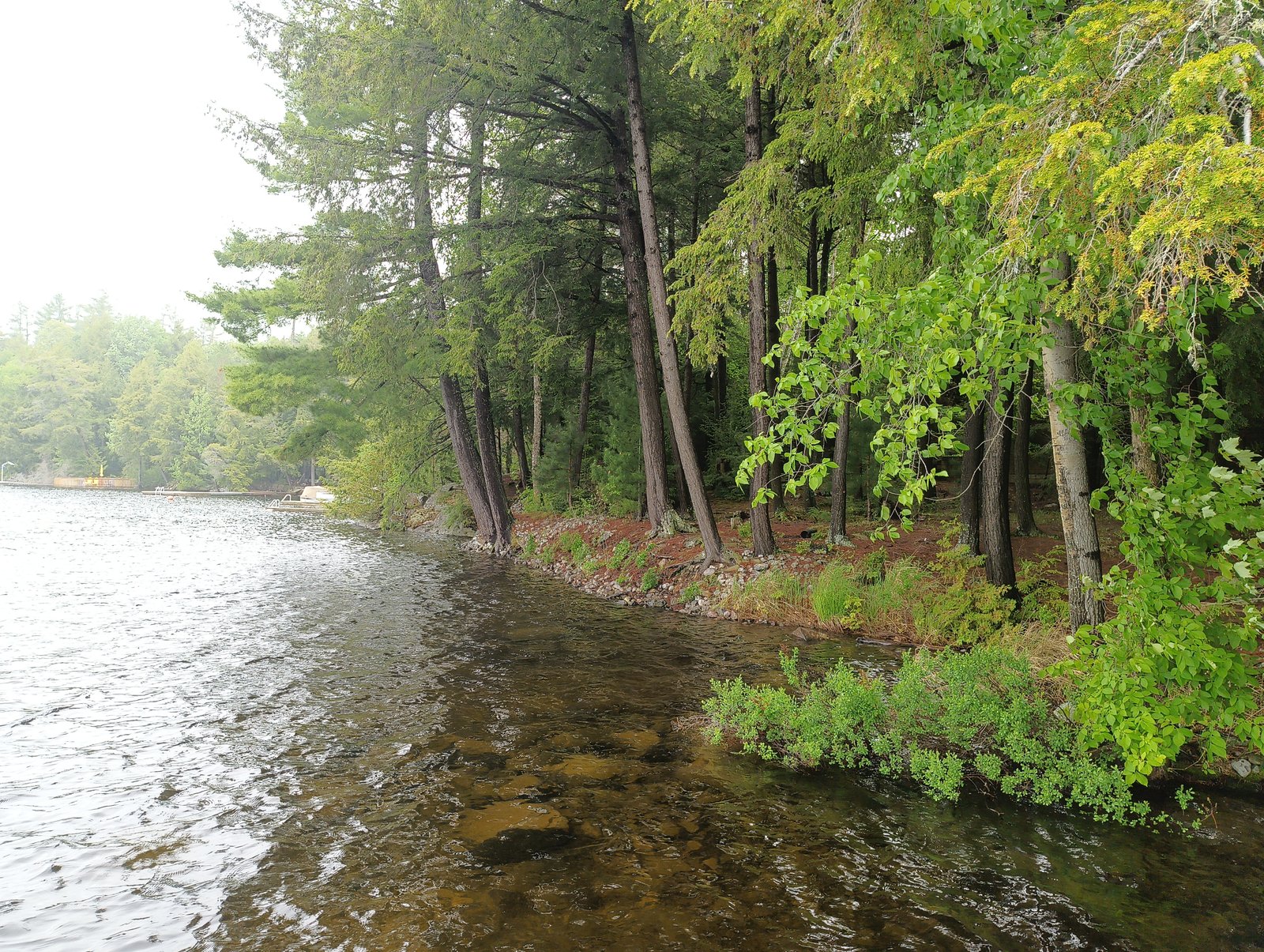
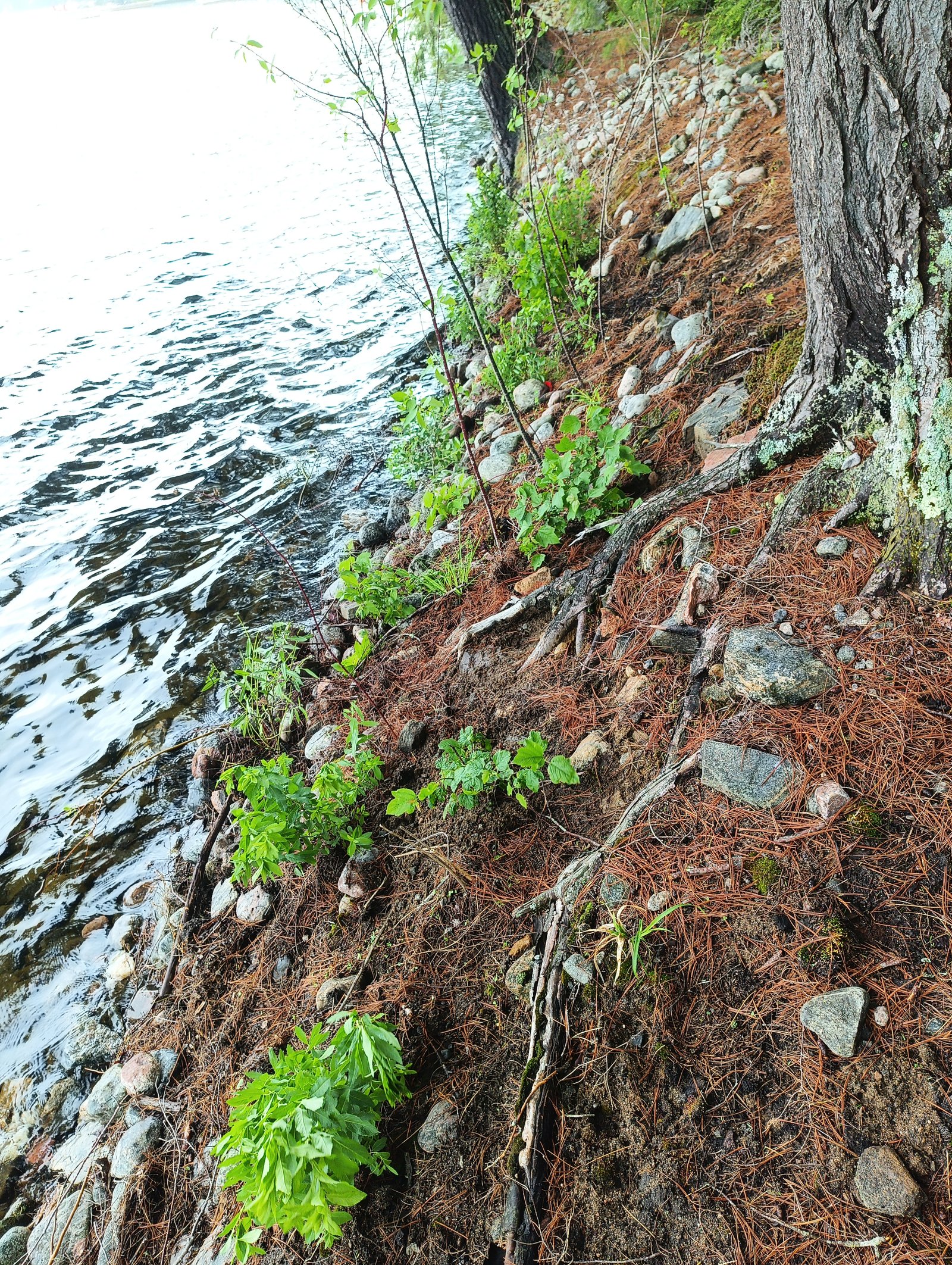
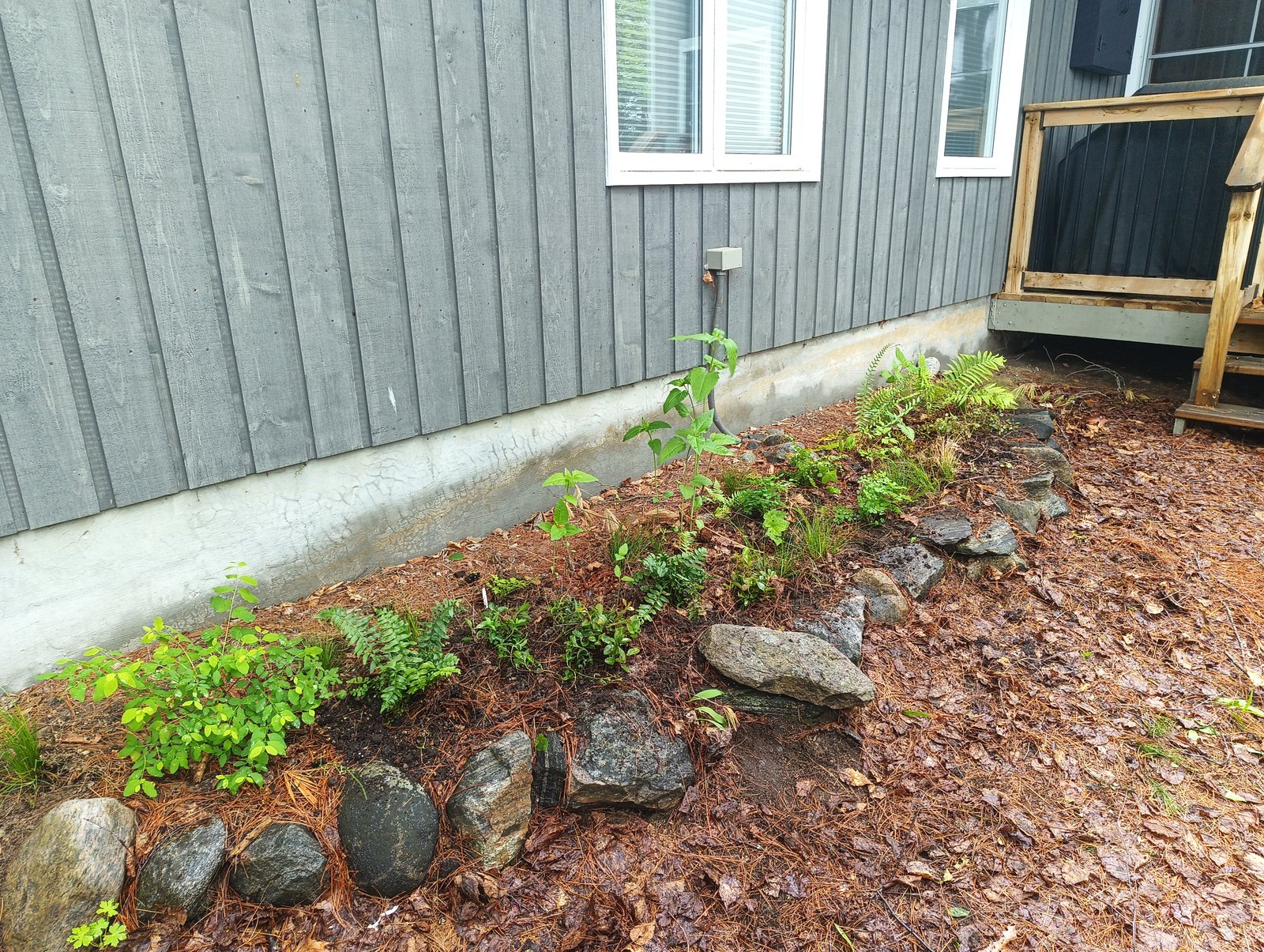
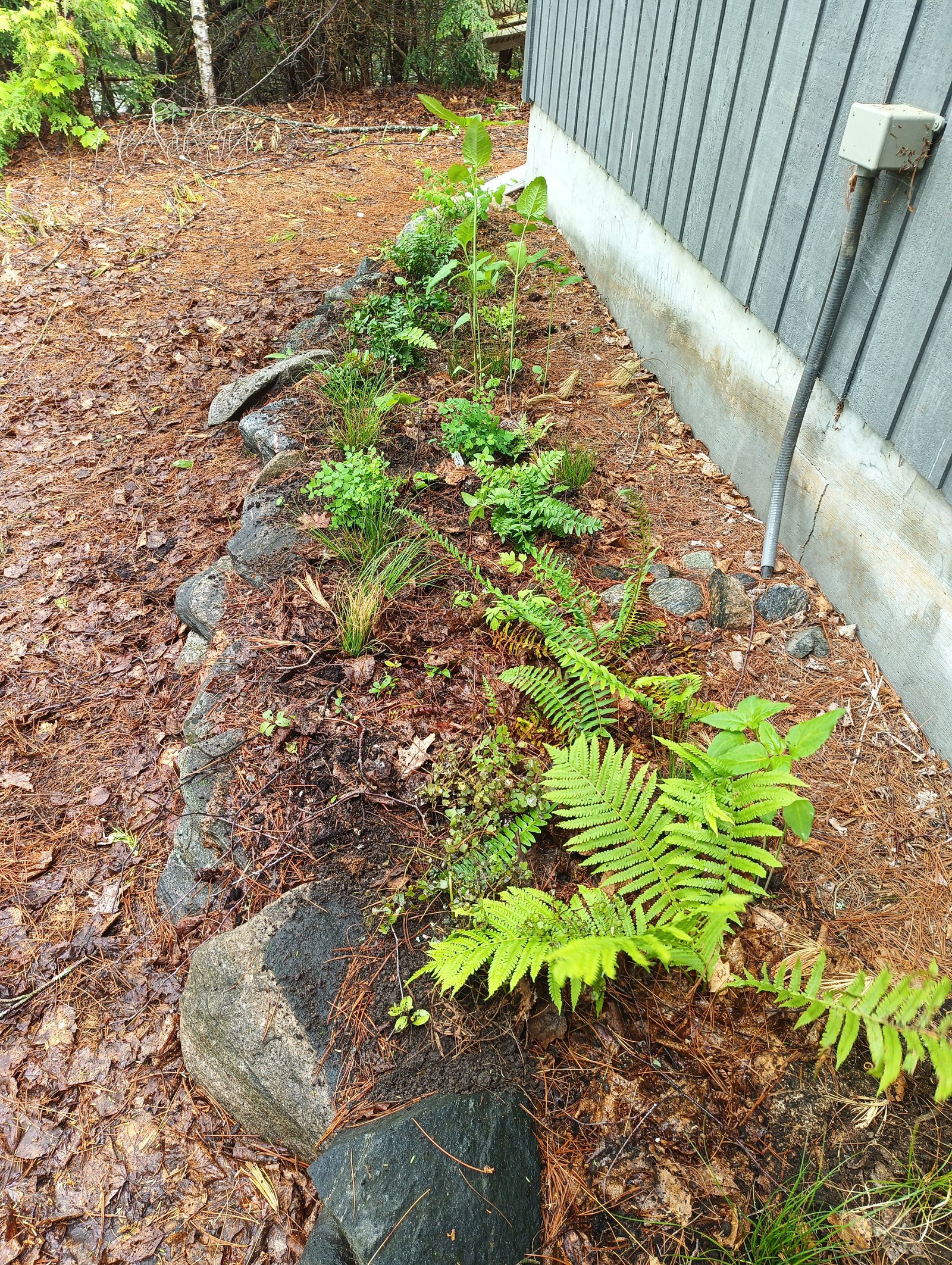
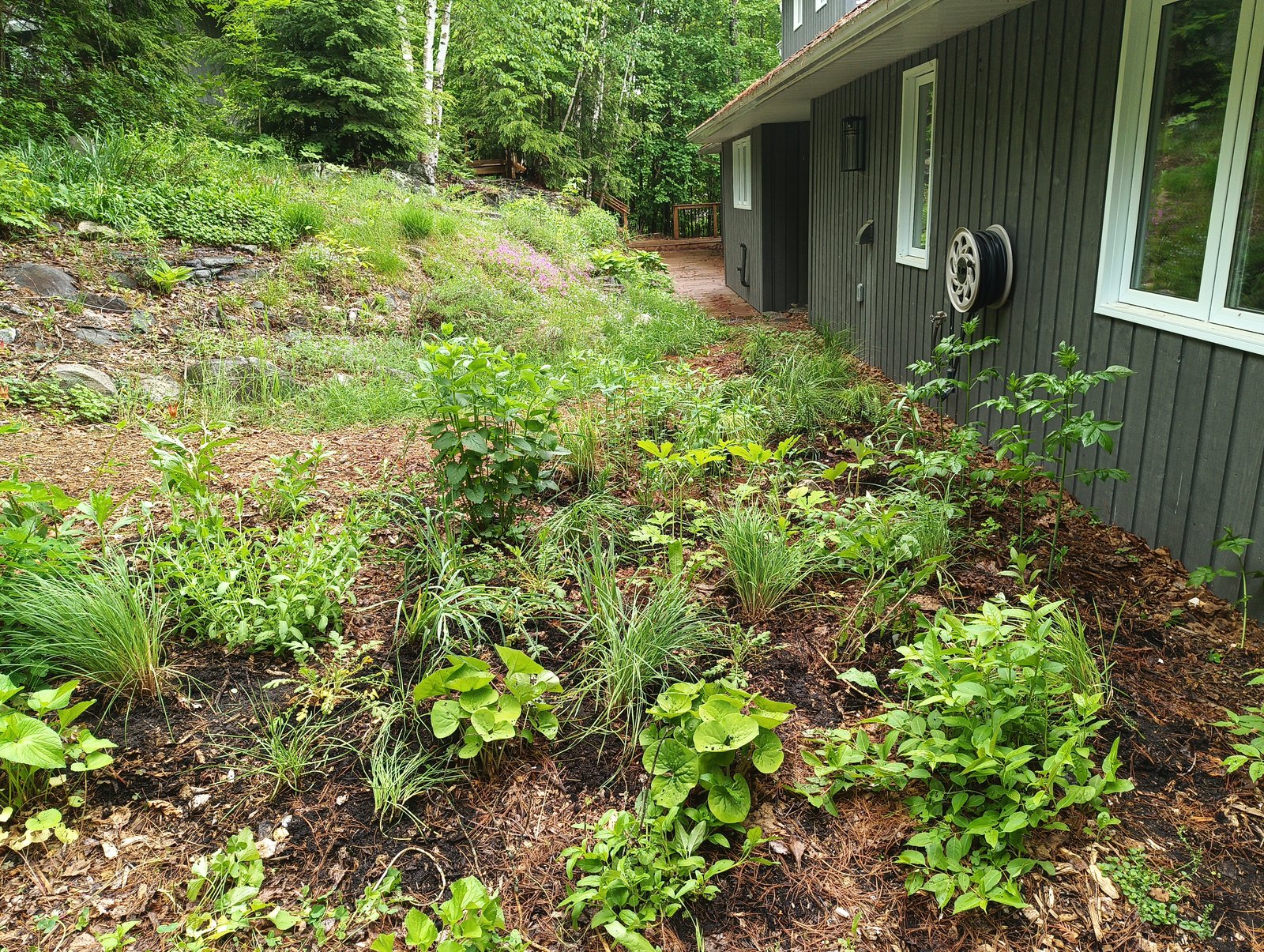
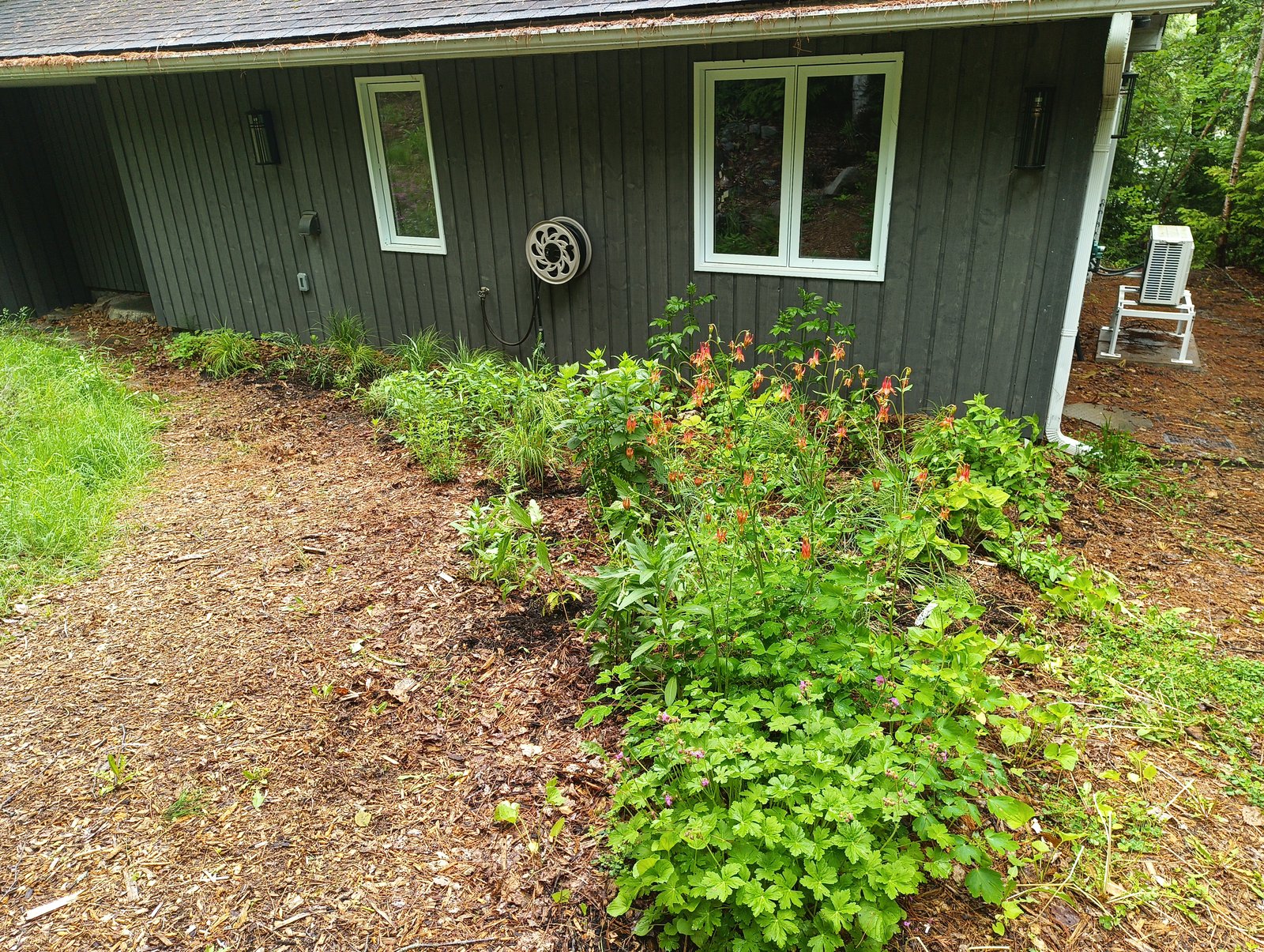
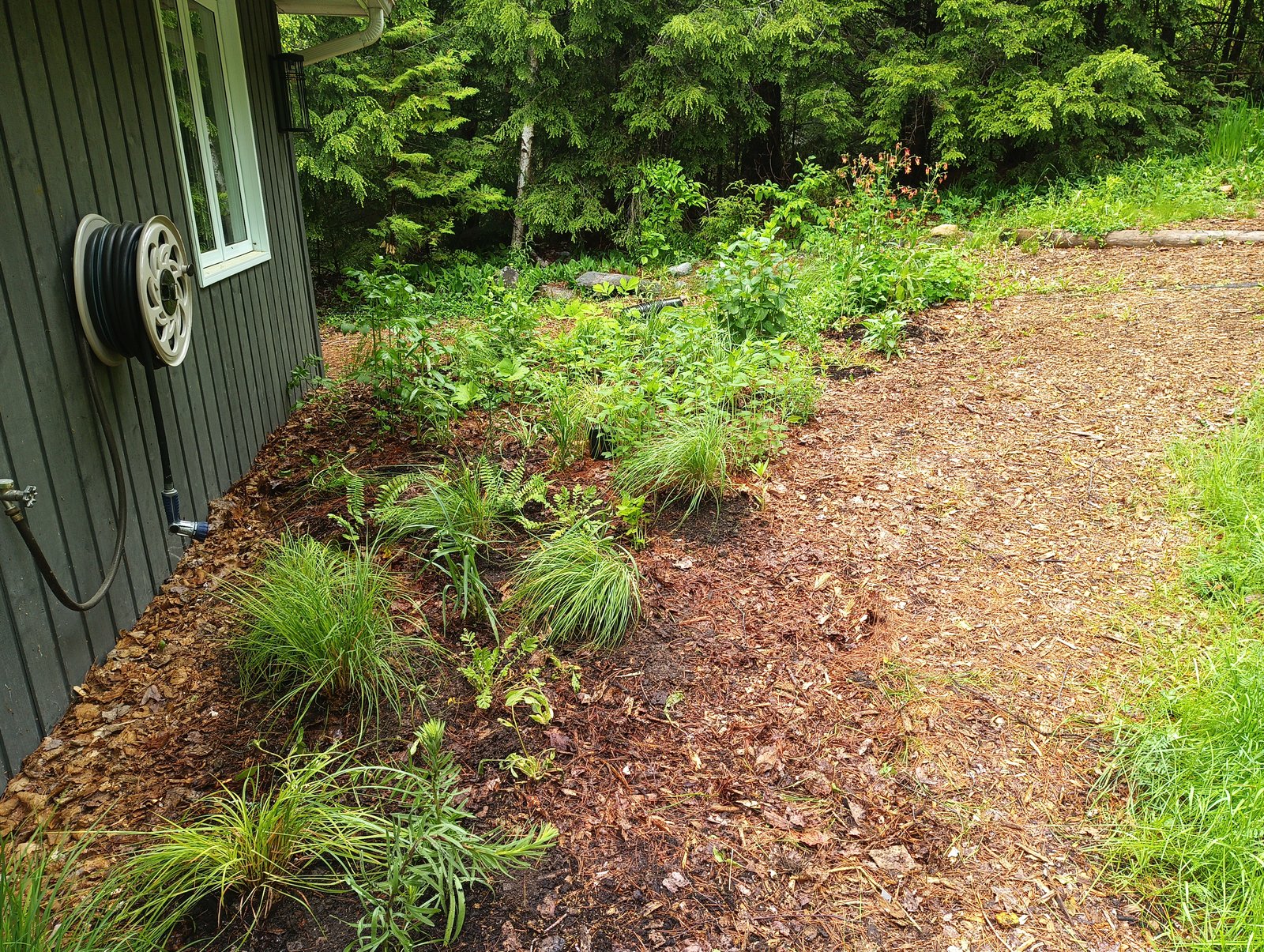
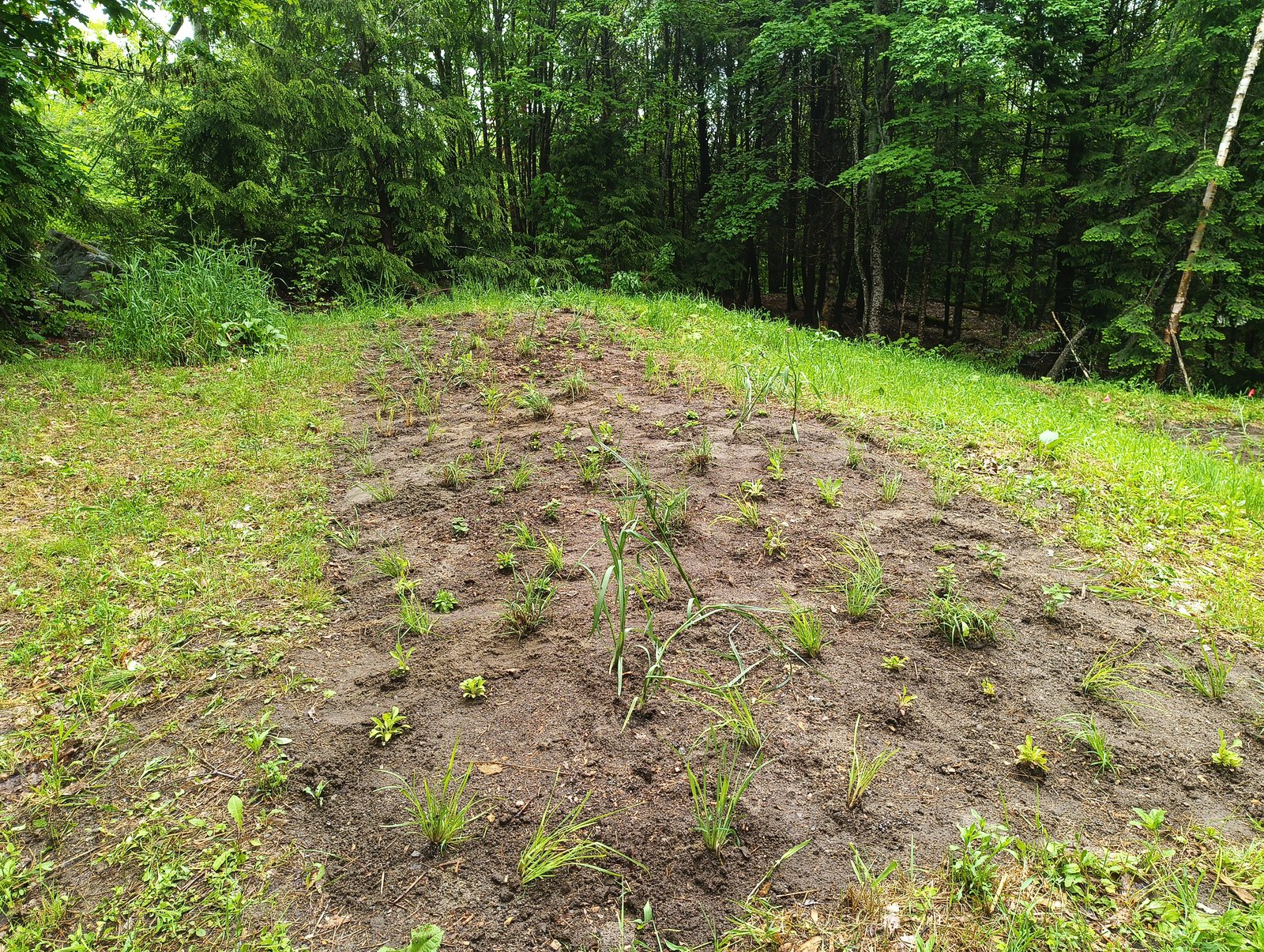
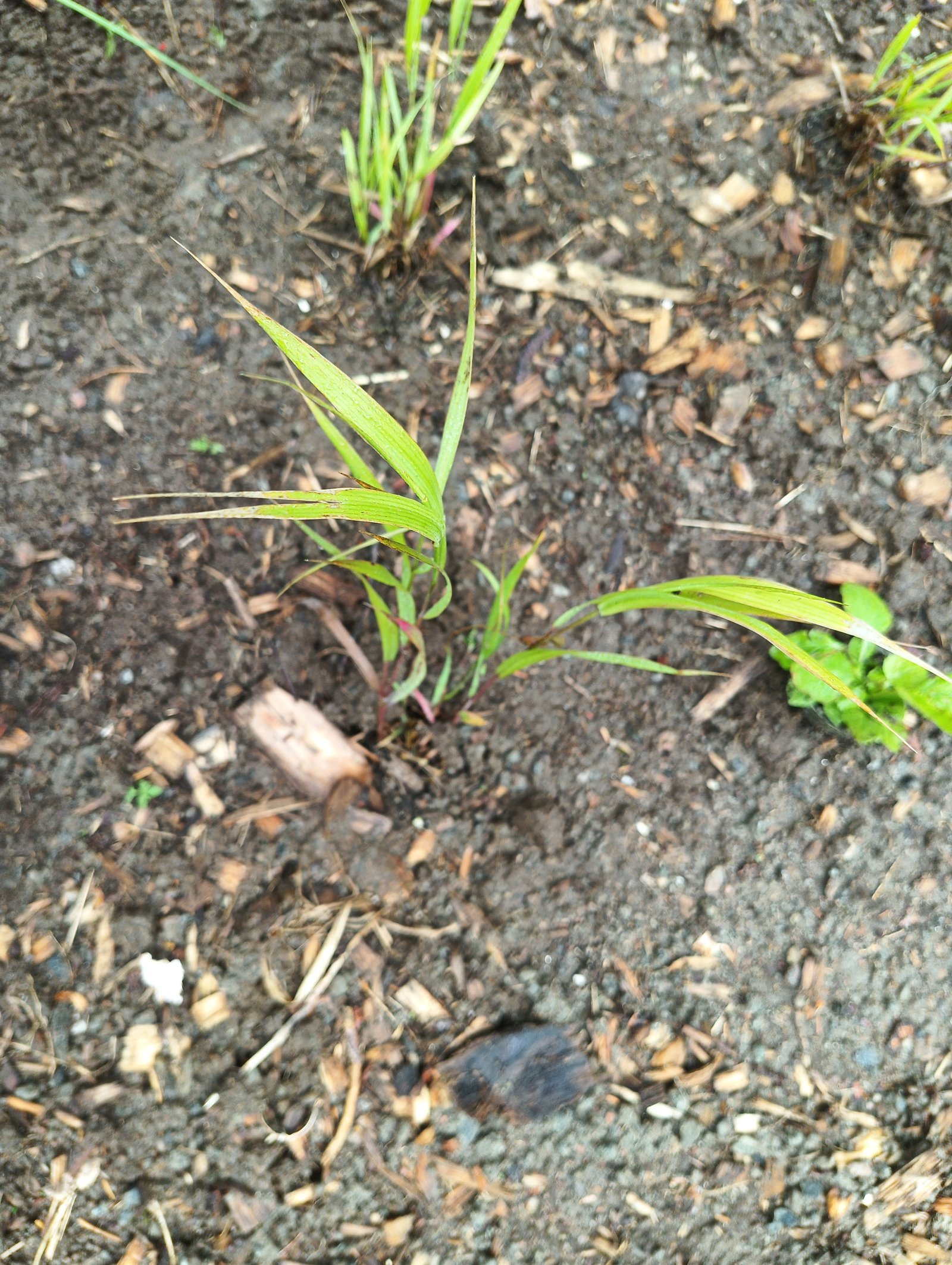
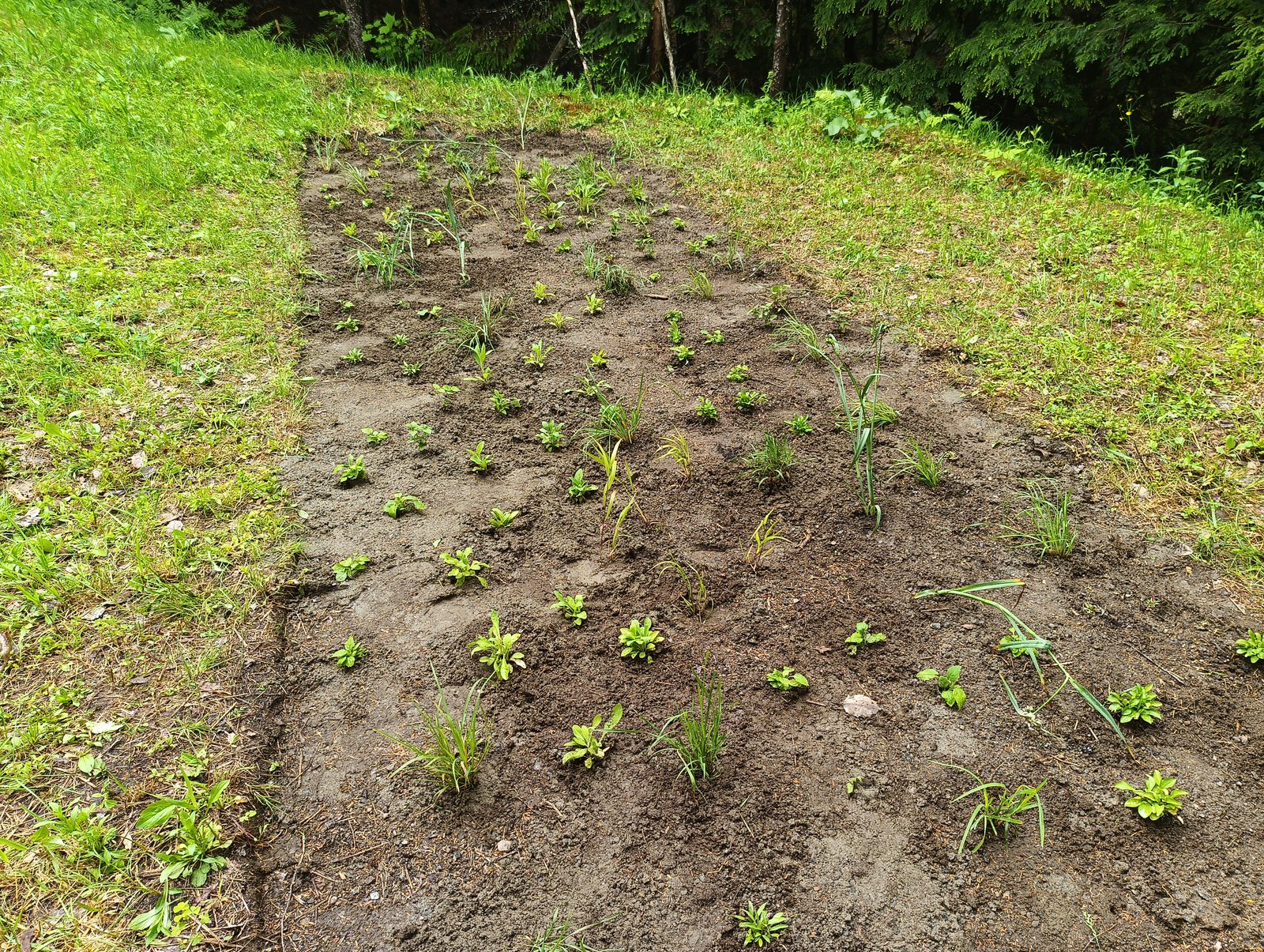
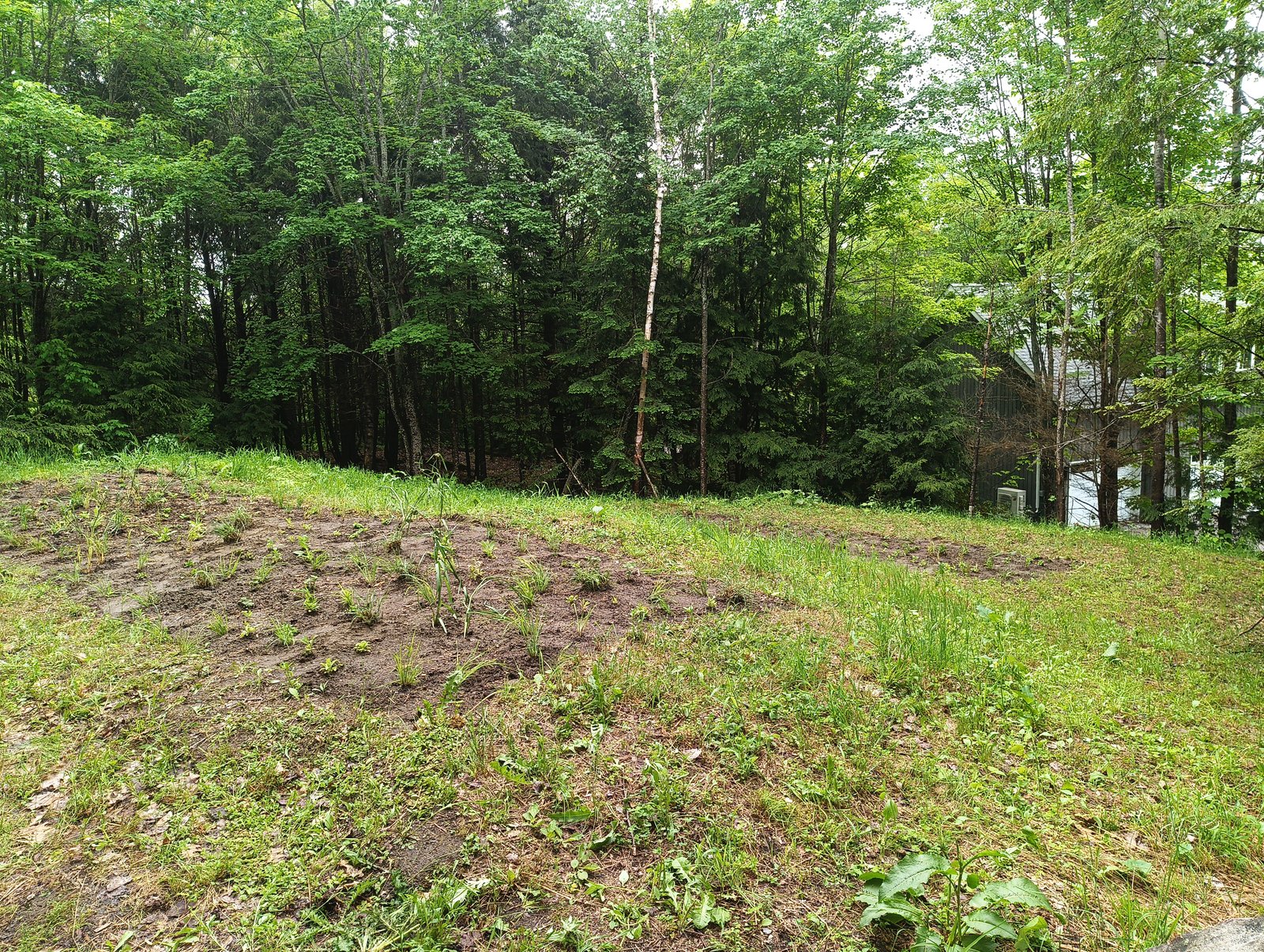
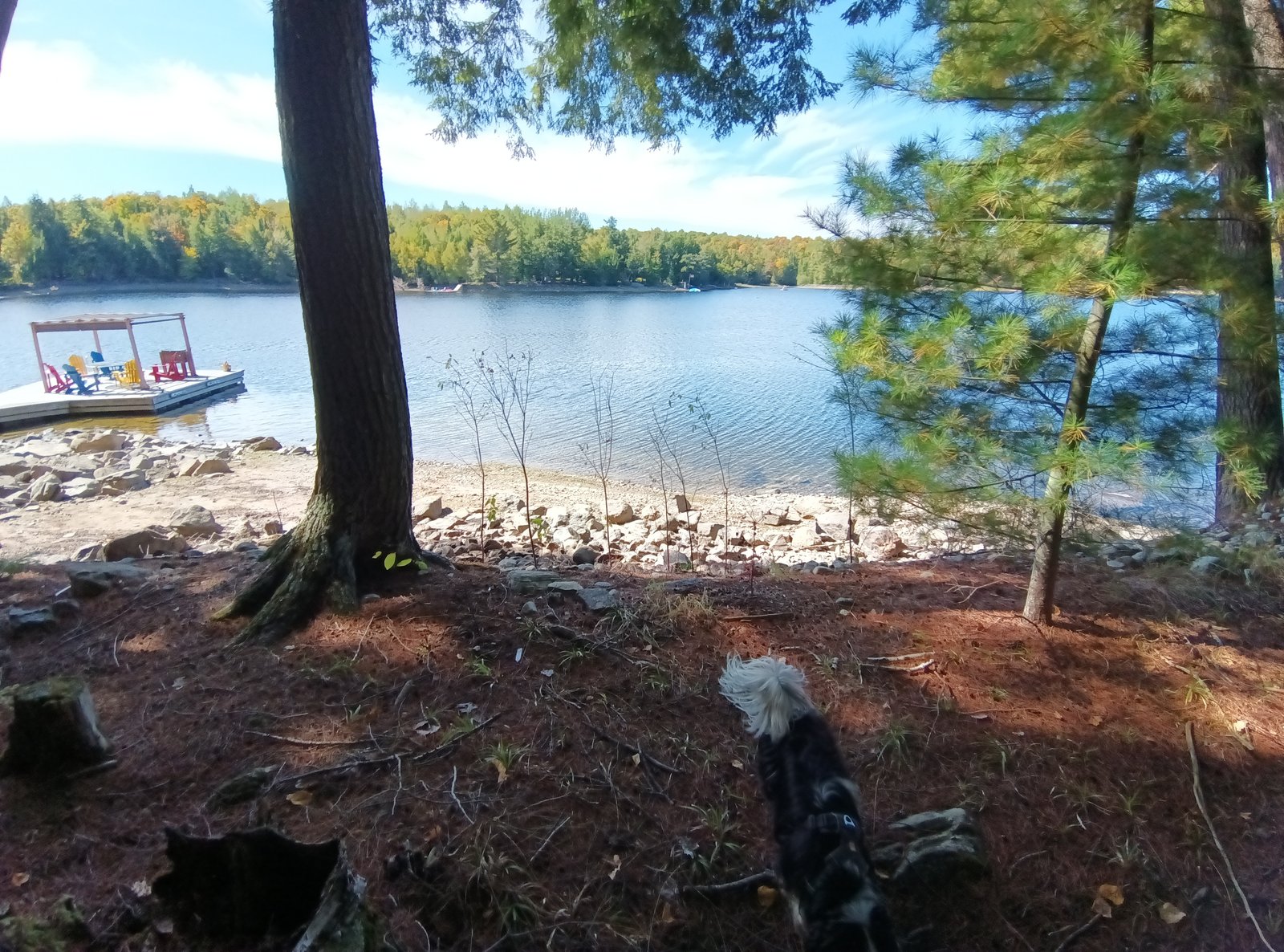
After On June 10, 2026, all four planting zones were installed. The triangle bed is now densely planted, with all the existing plants remaining. The shaded bed is also densely planted. The shoreline shrubs are installed, most of the rocky edge, but some on the little inlet before the dock. I tried to put them as close to the water as possible, considering lower water levels as the season progresses. The septic beds were installed, using smaller plants and a less dense level. This area will need stewardship to prevent the emergency of weeds. The surrounding grass could also be cut, but at a high level to keep the natural appearance but to prevent grasses going to seed.
Planting areas: Triangle Bed · Shoreline · Woodland Bed · Septic Meadow
The property divides into two types of projects, and I've designed each accordingly.
The triangle bed, woodland bed, and shoreline are standalone projects — defined areas with clear conditions and achievable goals. The triangle bed becomes a prairie-inspired pollinator garden: Little Bluestem and Side-oats Grama as the grass matrix, season-long flowering forbs woven through, bloom from Prairie Smoke in April to Azure Aster in October. The woodland bed replaces struggling sun plants with true shade species — Wild Blue Phlox, Rosy Sedge, Christmas Fern, and White Baneberry — for a refined, low-maintenance woodland garden. The shoreline becomes a tough shrub layer that handles the flooding and drought cycle, working with the existing red osier dogwood.
The septic leach bed is a different kind of project — a long-term managed meadow conversion. Starting with approximately 20% of the 1,800 square feet, we establish a native grass-and-forb meadow and mow the remainder on an appropriate schedule. The planted area expands by 10–20% each year as the conversion succeeds. It's a patient approach, but the one most likely to work while protecting the septic infrastructure.
Throughout all four zones, the plant palette shares a common character: stress-tolerant species matched to each area's actual conditions. Little Bluestem and Side-oats Grama for the dry, sandy leach bed. Willows and Winterberry for the wet-to-dry shoreline. Christmas Fern for the deep shade. Plants chosen not because they're easy, but because they're right.
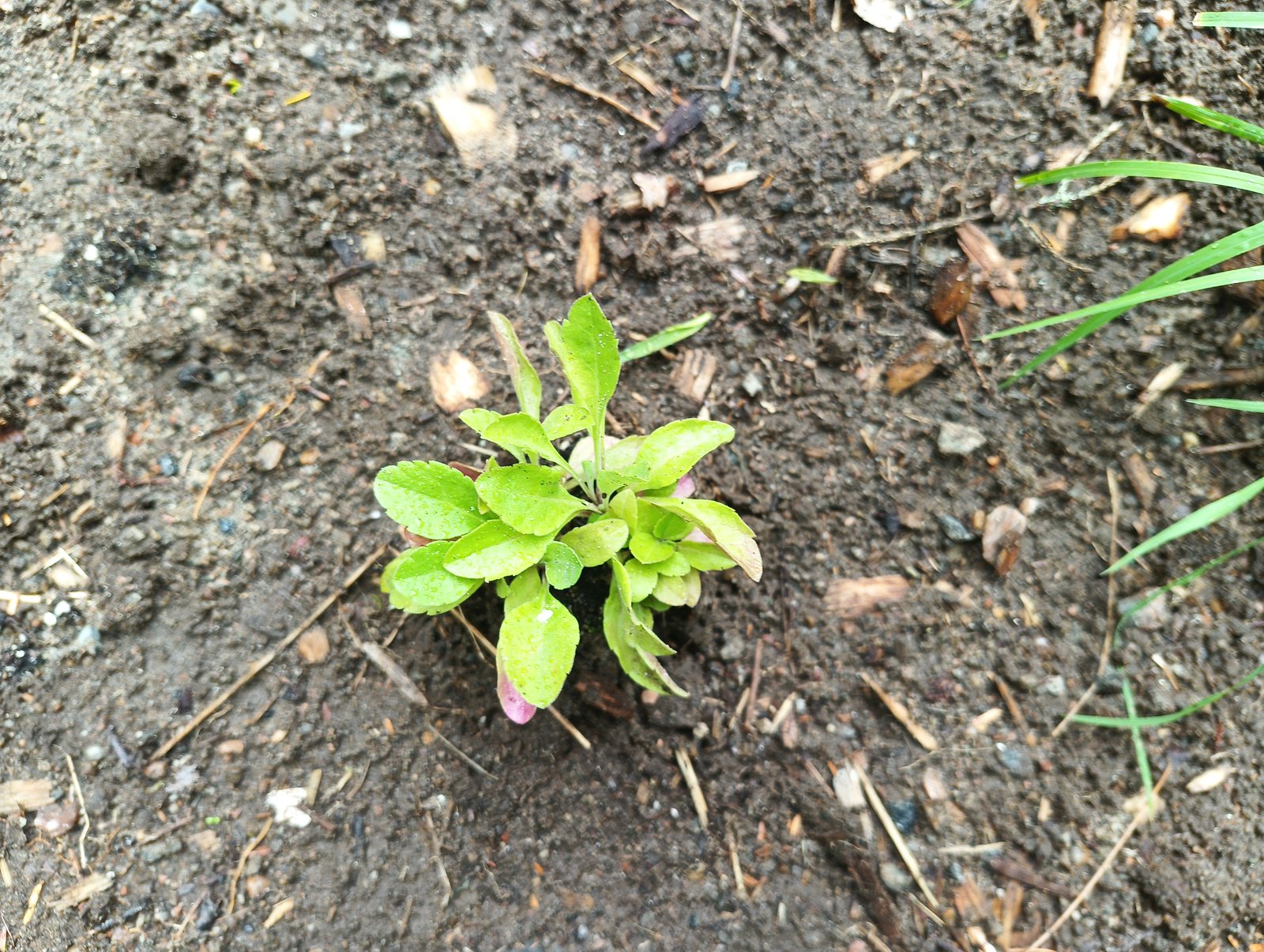
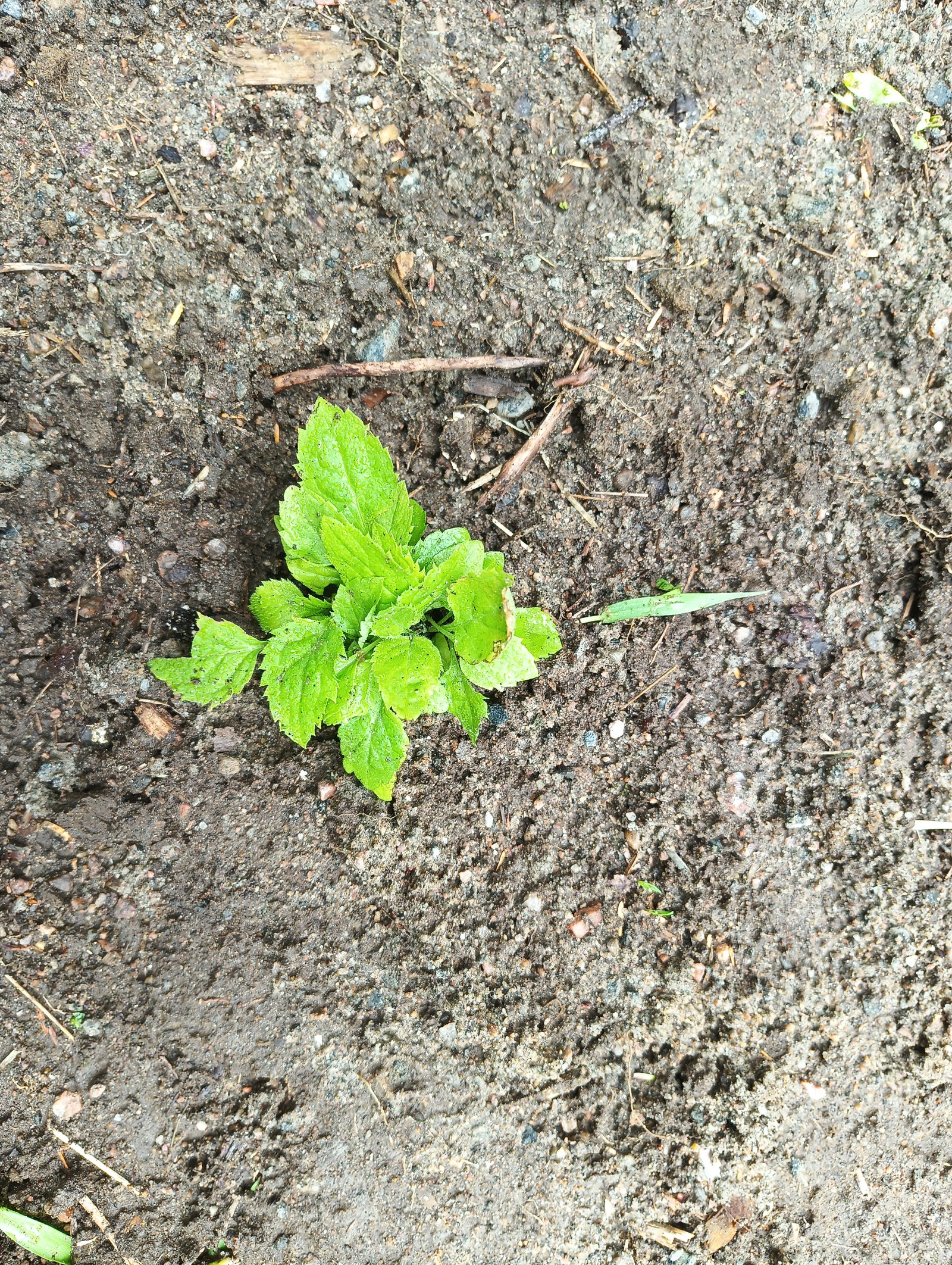
Click any plant to see its photo, rationale, and growing details.
June 10, 2026