Landscape Vision Guide
The Paudash Bank
A property in Haliburton County
Lakeside Slope Restoration — Native Plant Community · 2025

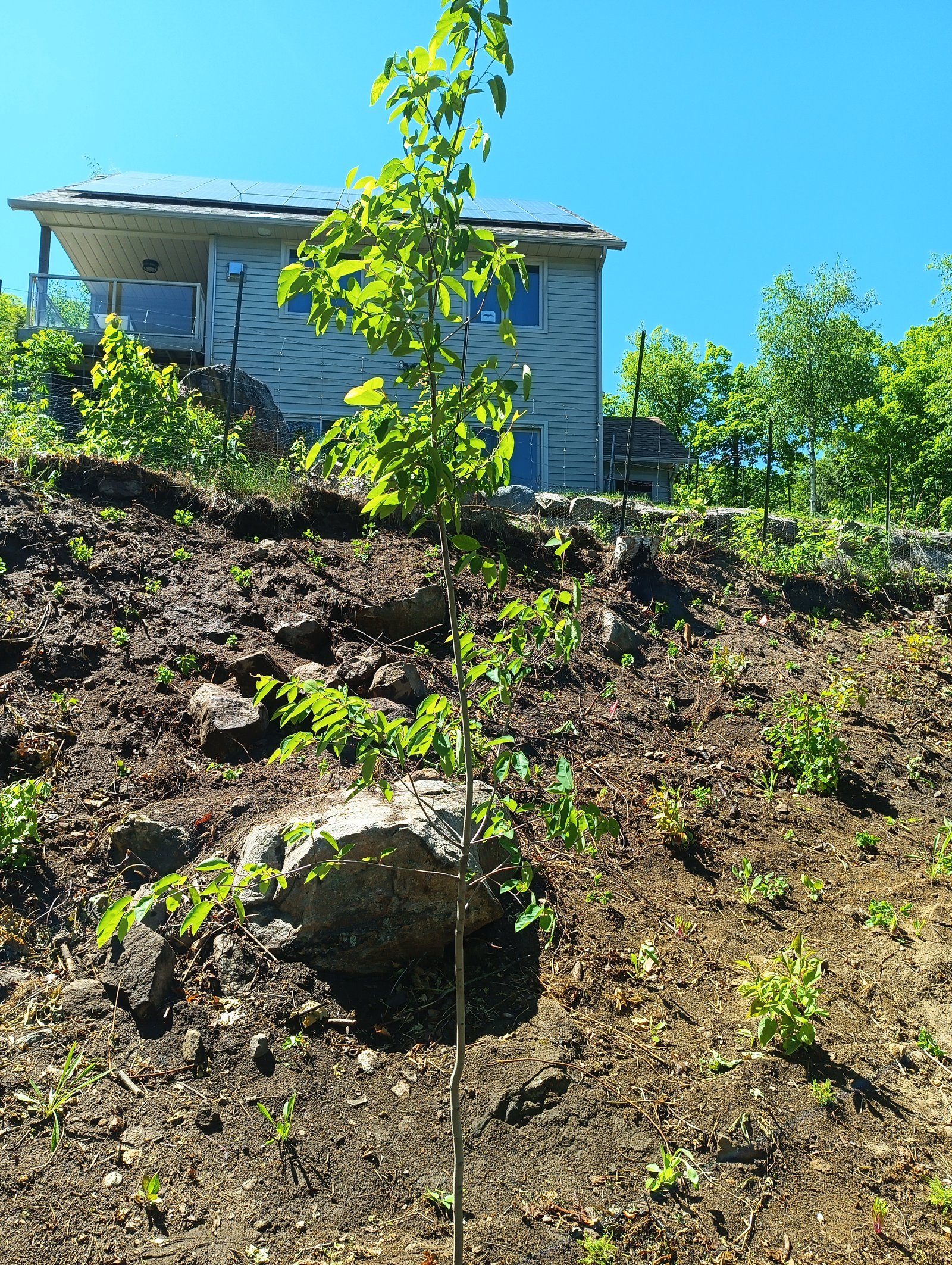
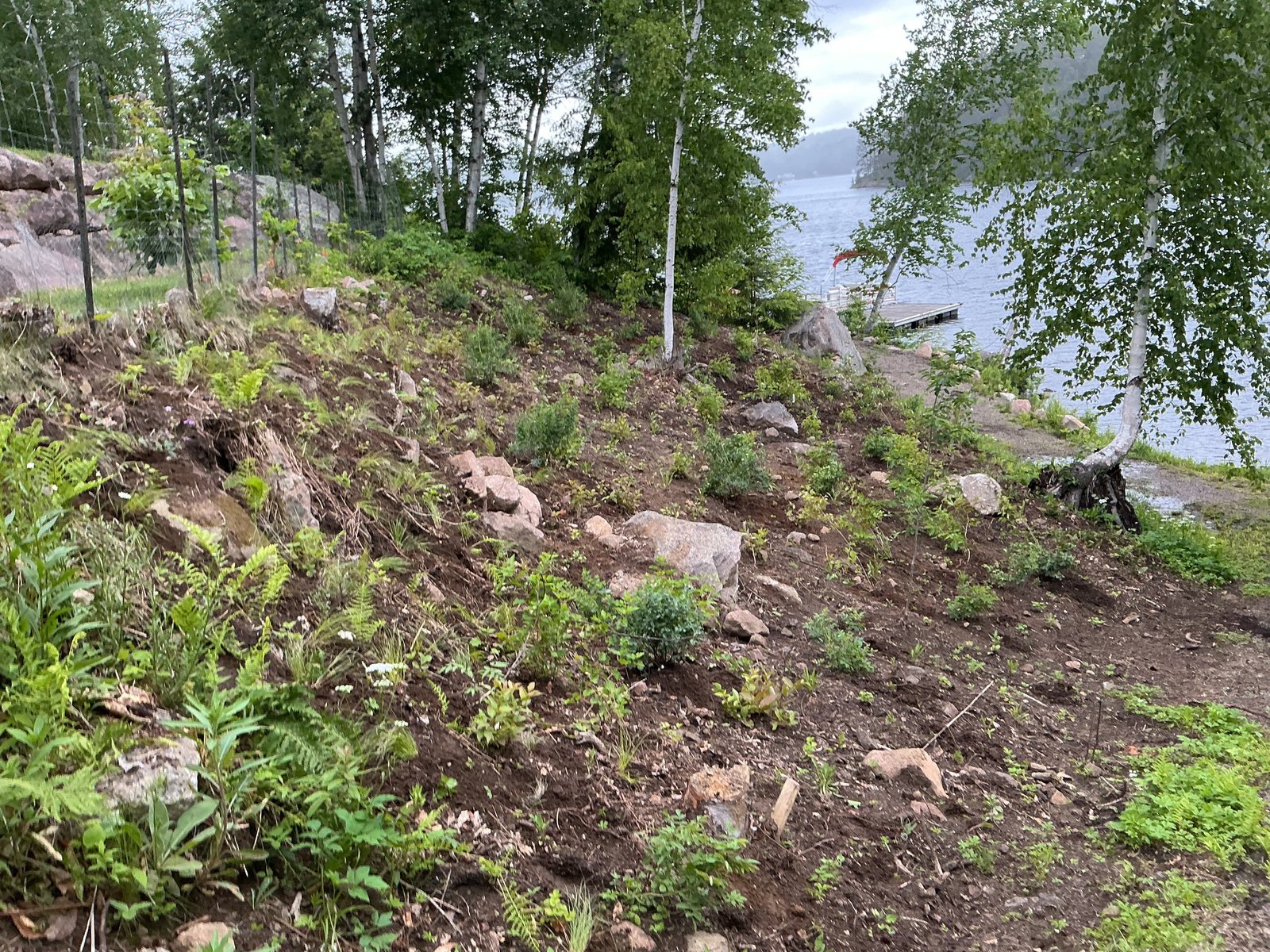
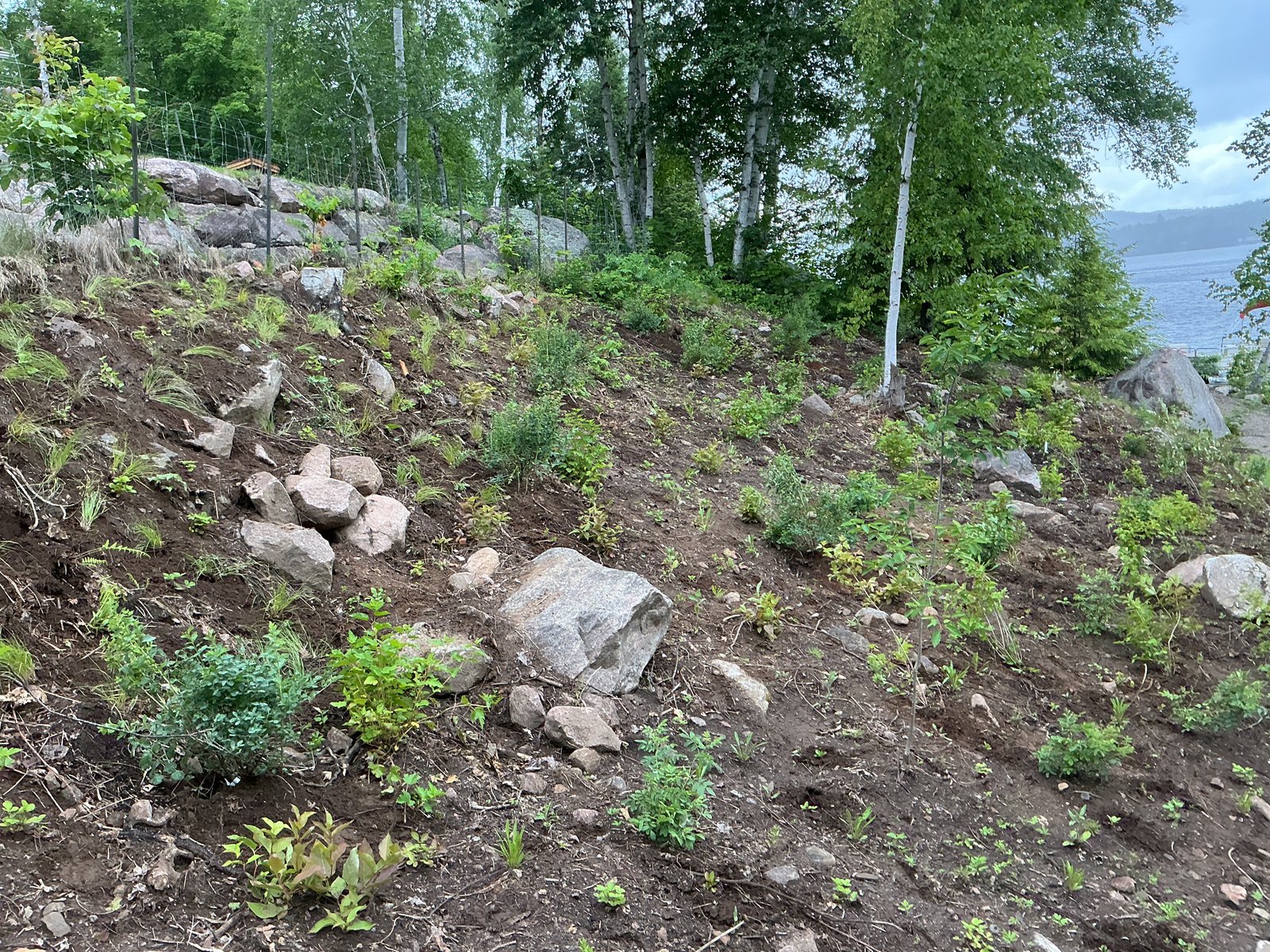
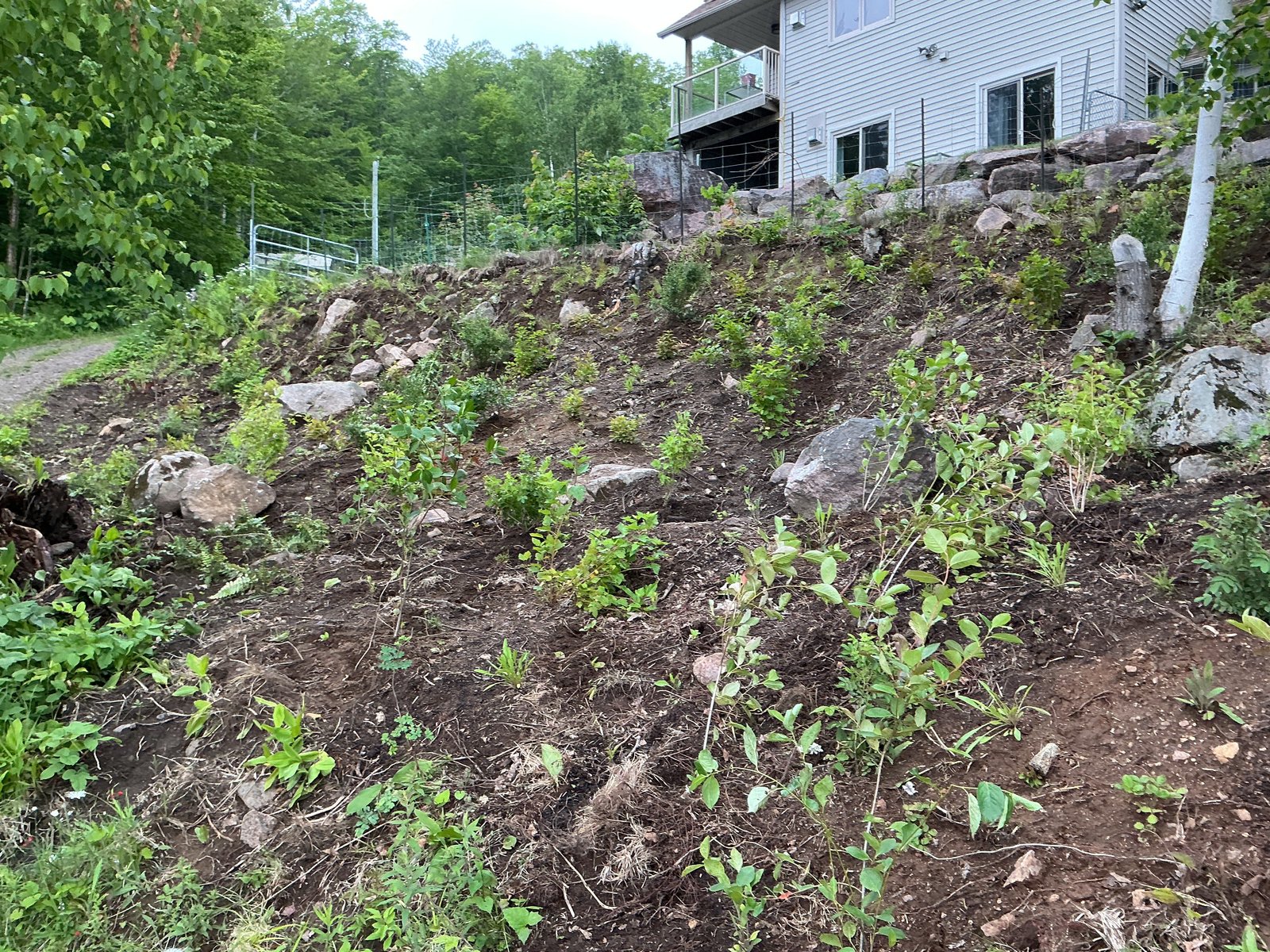
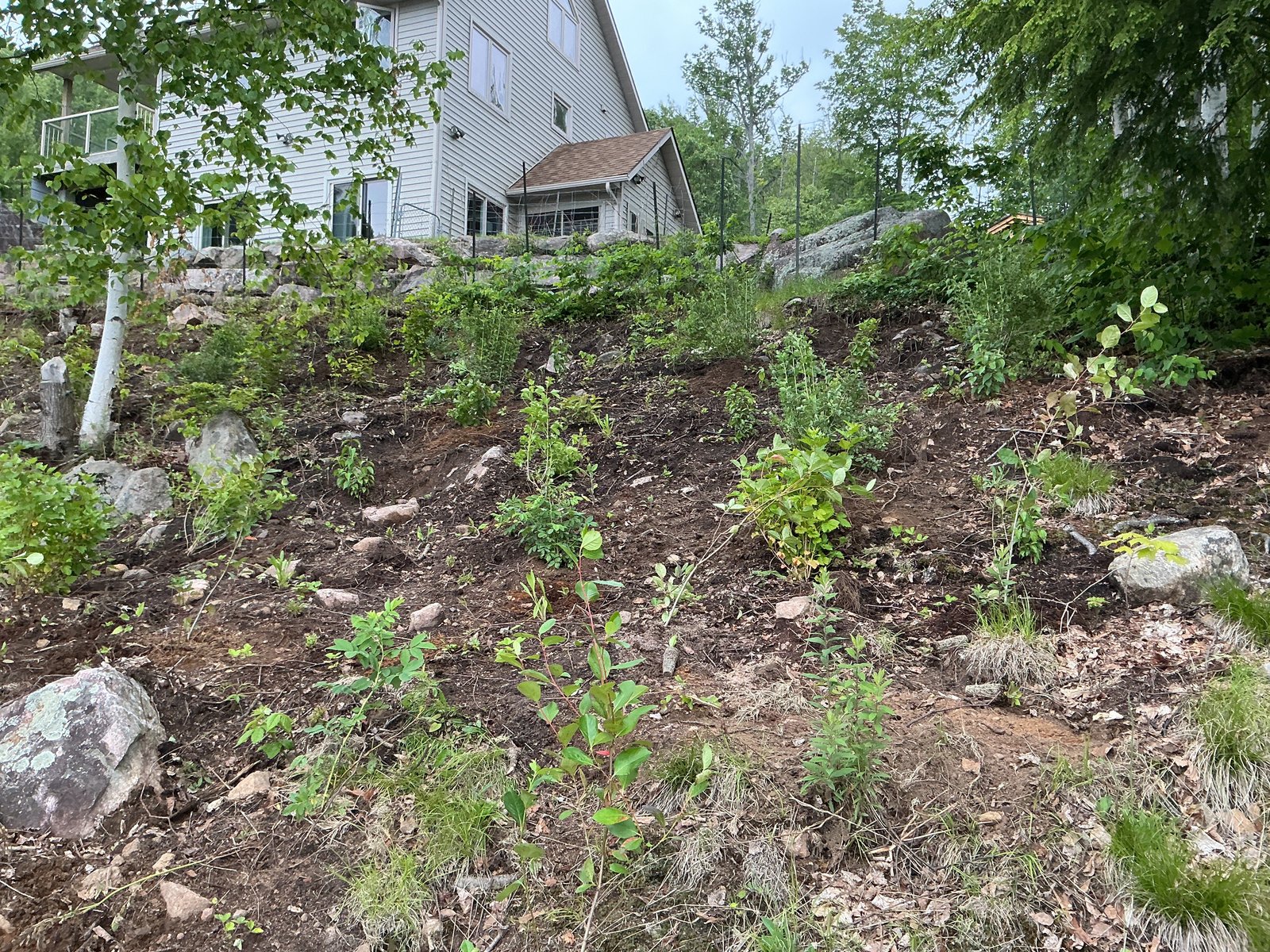
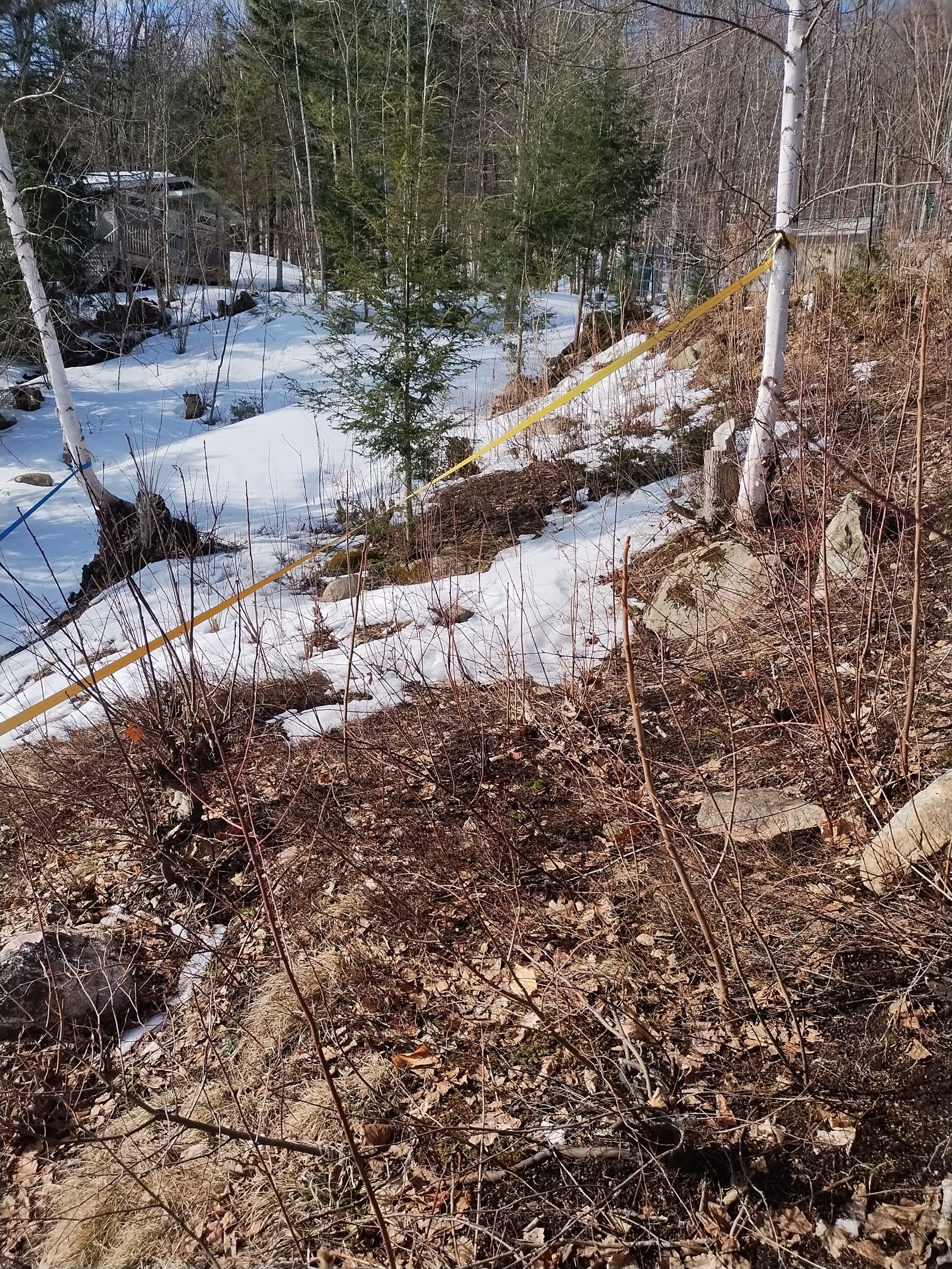 Before After
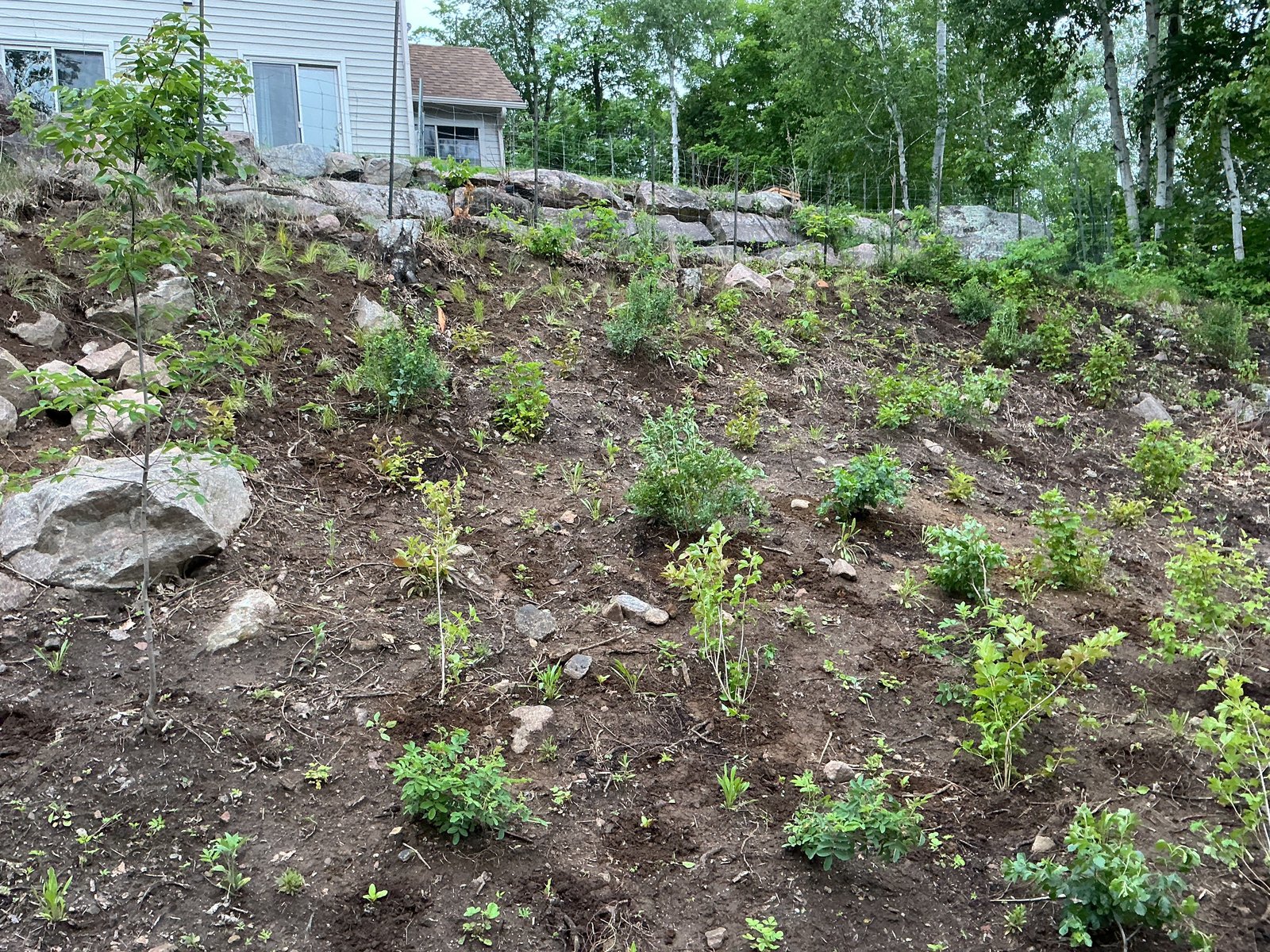
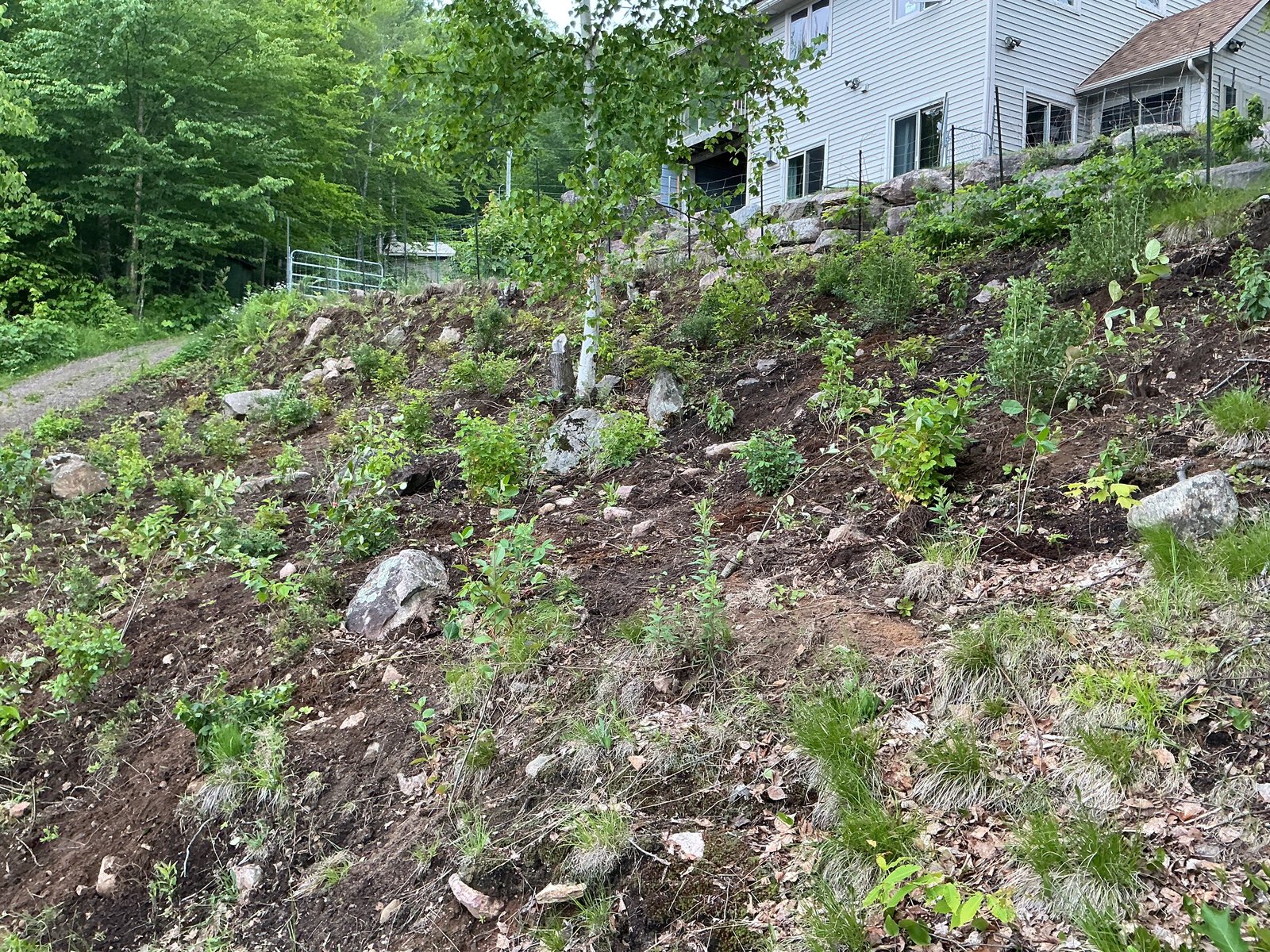
 Installation began in June 2026 with site preparation including stump removal, clearing of maple and sumac suckers, and removal of problematic species. Planting was completed across two sessions, with 19 native species and about 900 plants installed across the bank.
Planting areas: Paudash Bank
The shrubs were placed in strategic positions — either for appearance or because they suit particular conditions on the bank. The perennials, by contrast, were planted randomly rather than in the drifts and clumps of a traditional garden. This gives the site a more natural appearance and, critically, requires far less ongoing work to maintain. The more control asserted over a planting, the more maintenance it demands.
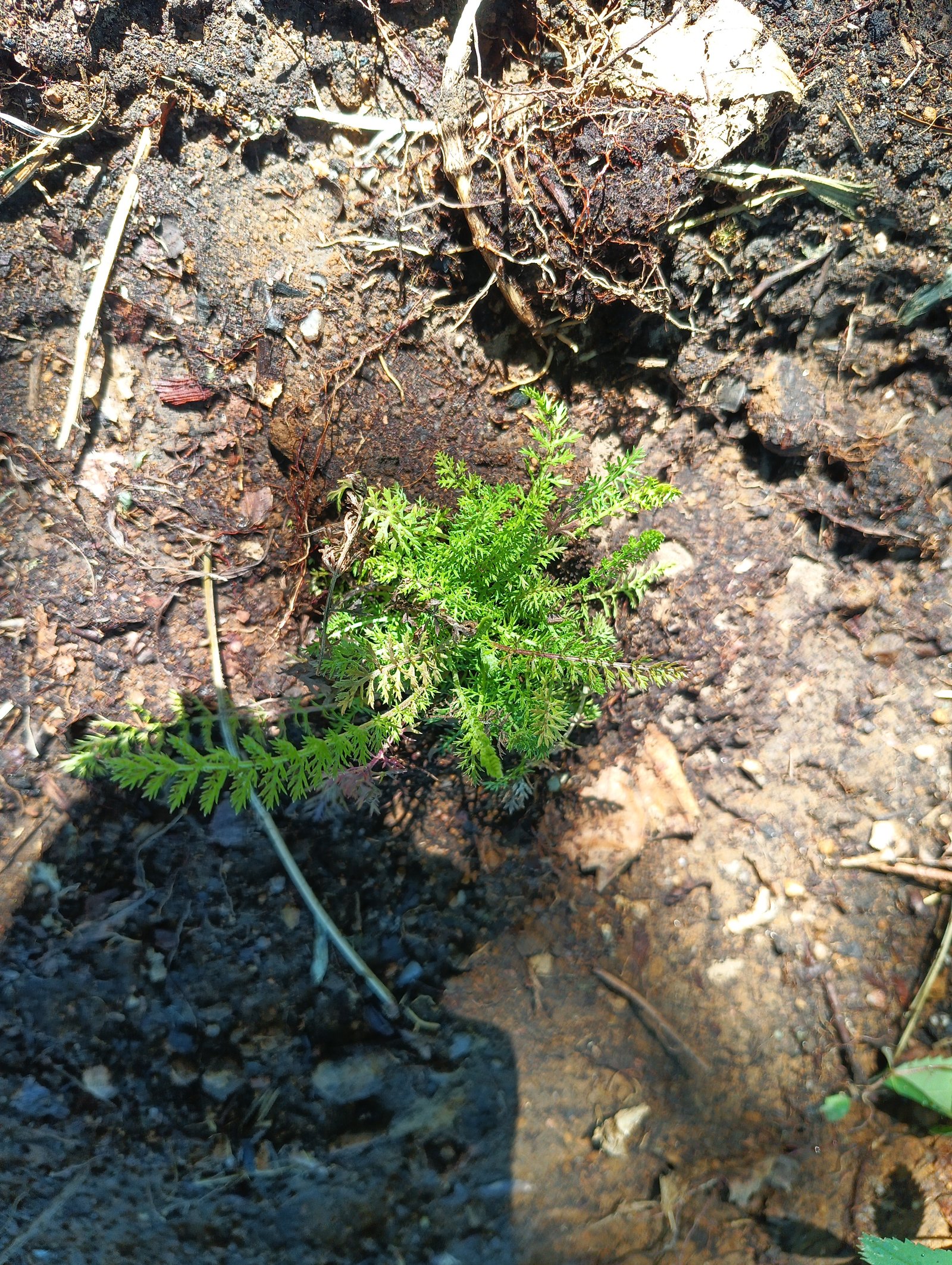
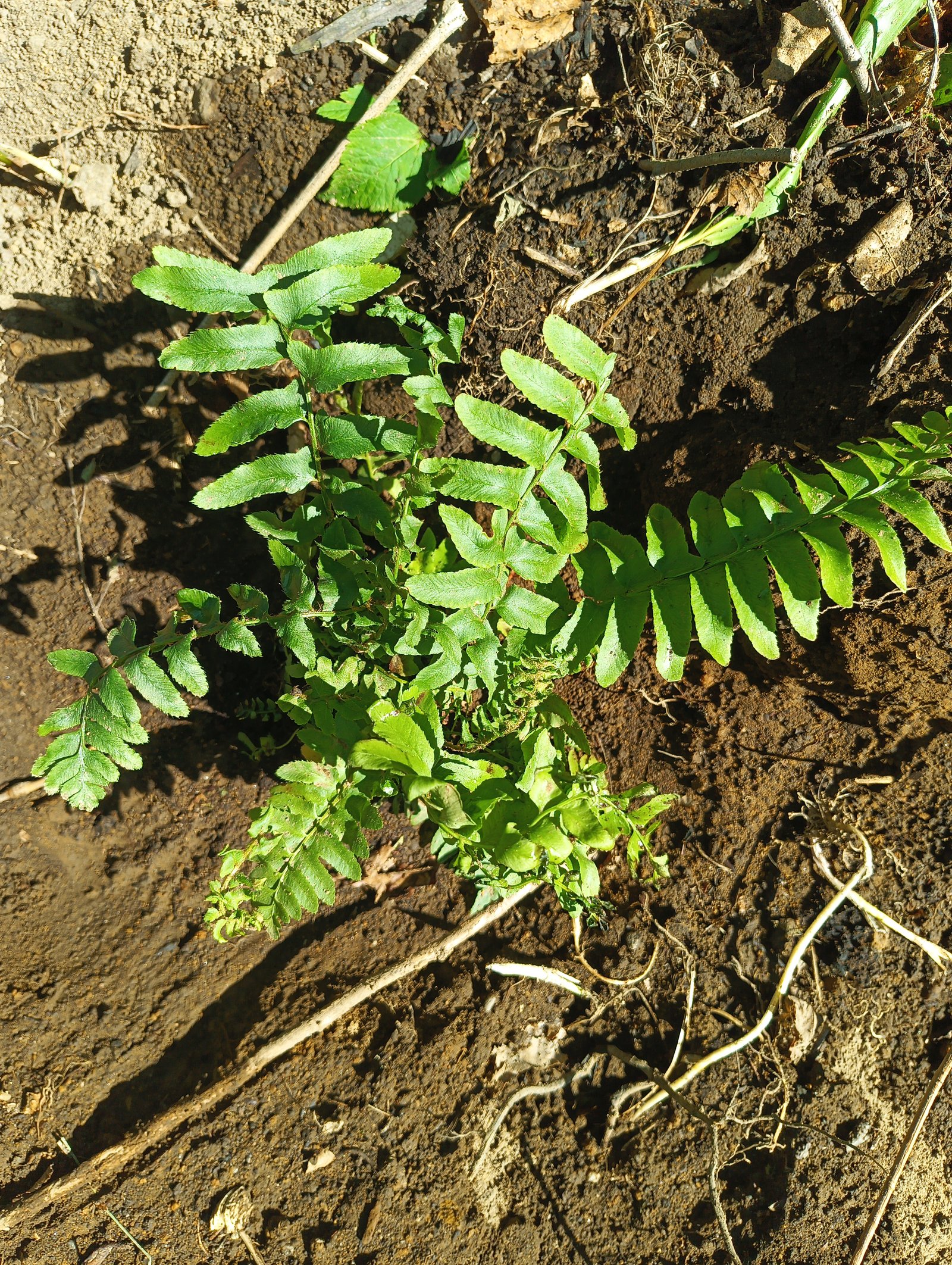
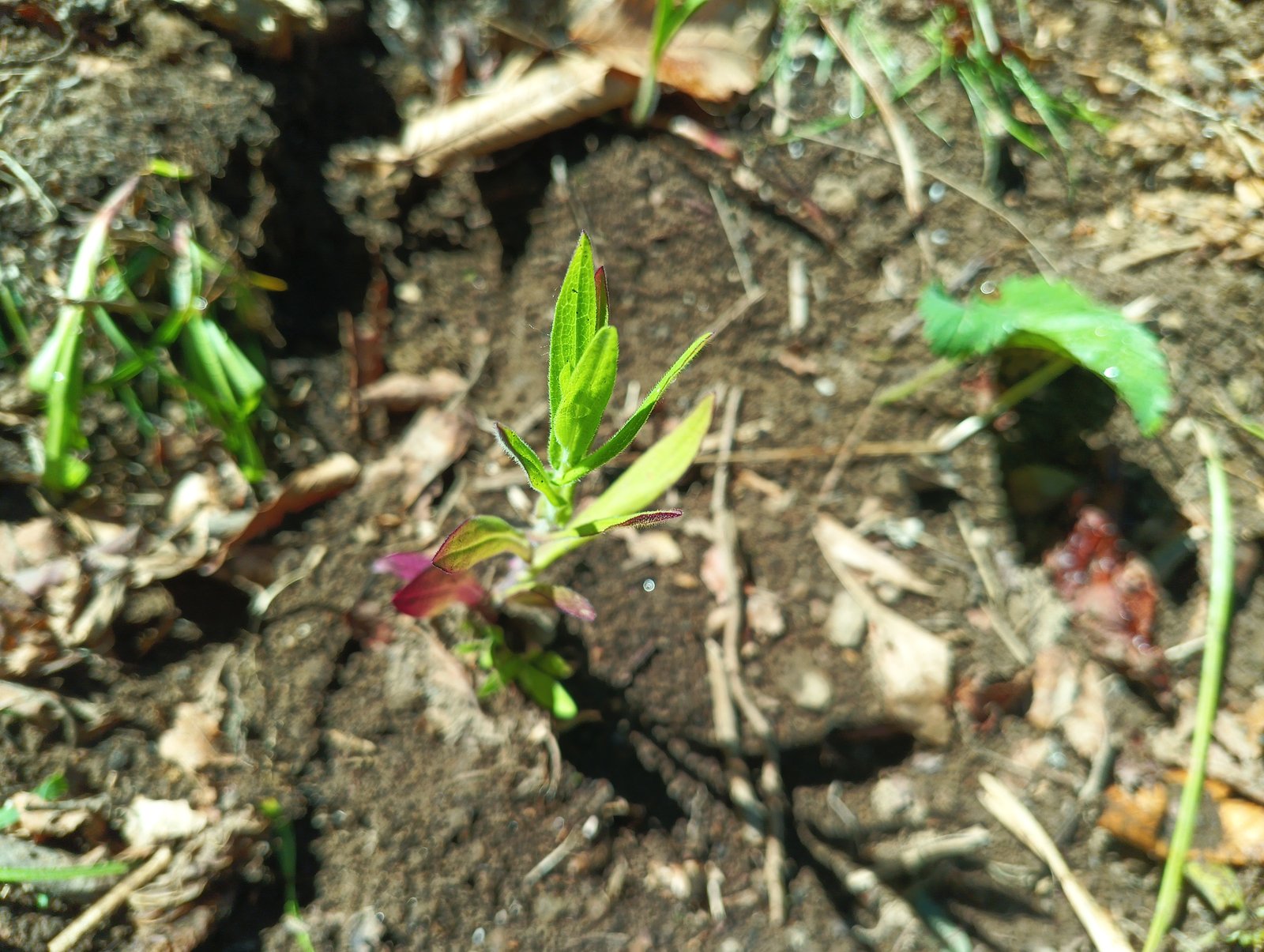
The plants were deliberately chosen as small stock. Small plants establish more quickly and need less care in their first year — a larger plant with more foliage requires a more established root system, which means more irrigation, particularly through a dry summer. By the second or third year, these plants will have caught up to larger stock and will be better established on the bank. The planting looked sparse at installation, but the site should be mostly green by the end of this first growing season. The shrubs will take a few more years to reach their mature size and fill their structural roles.
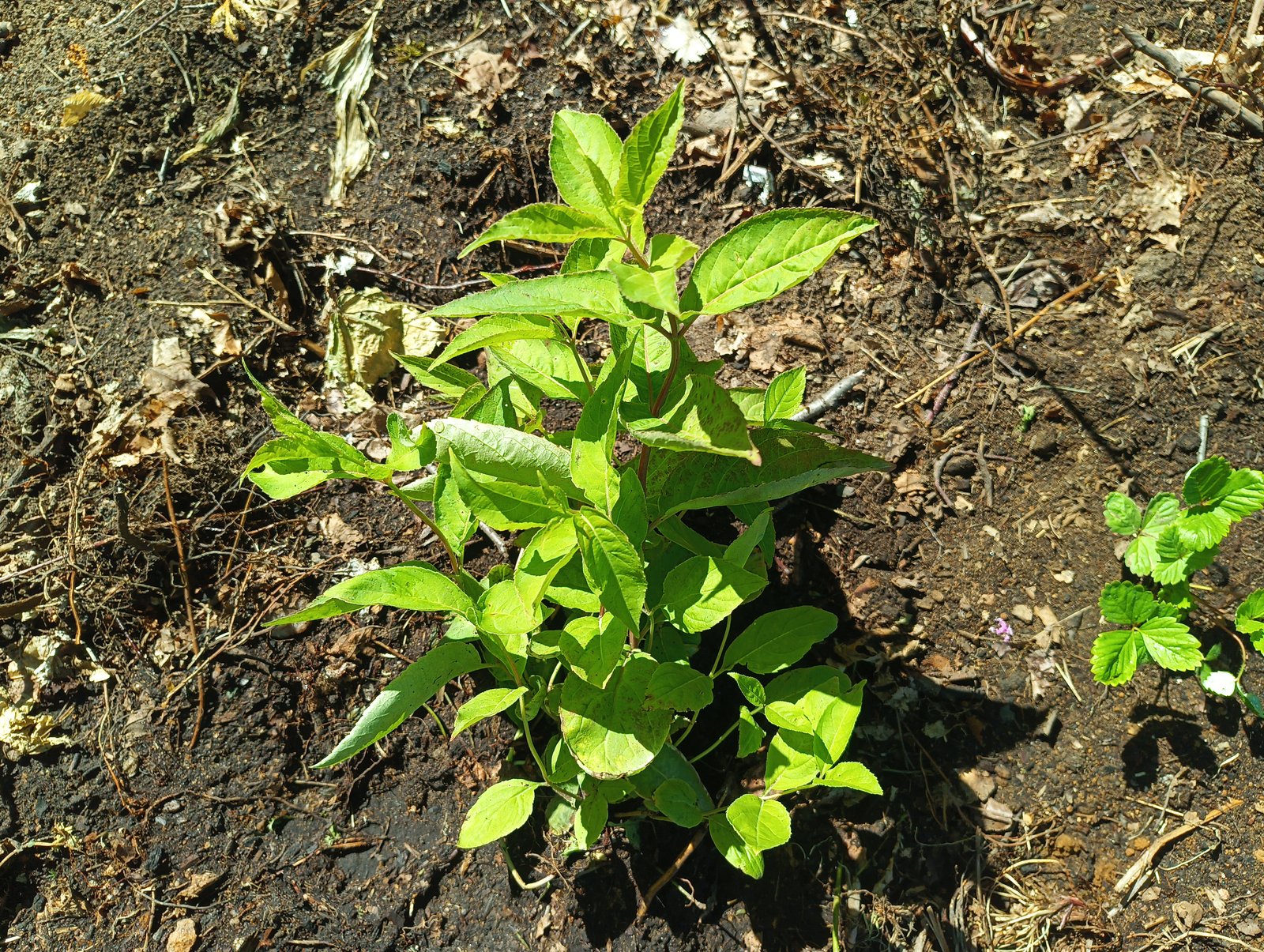
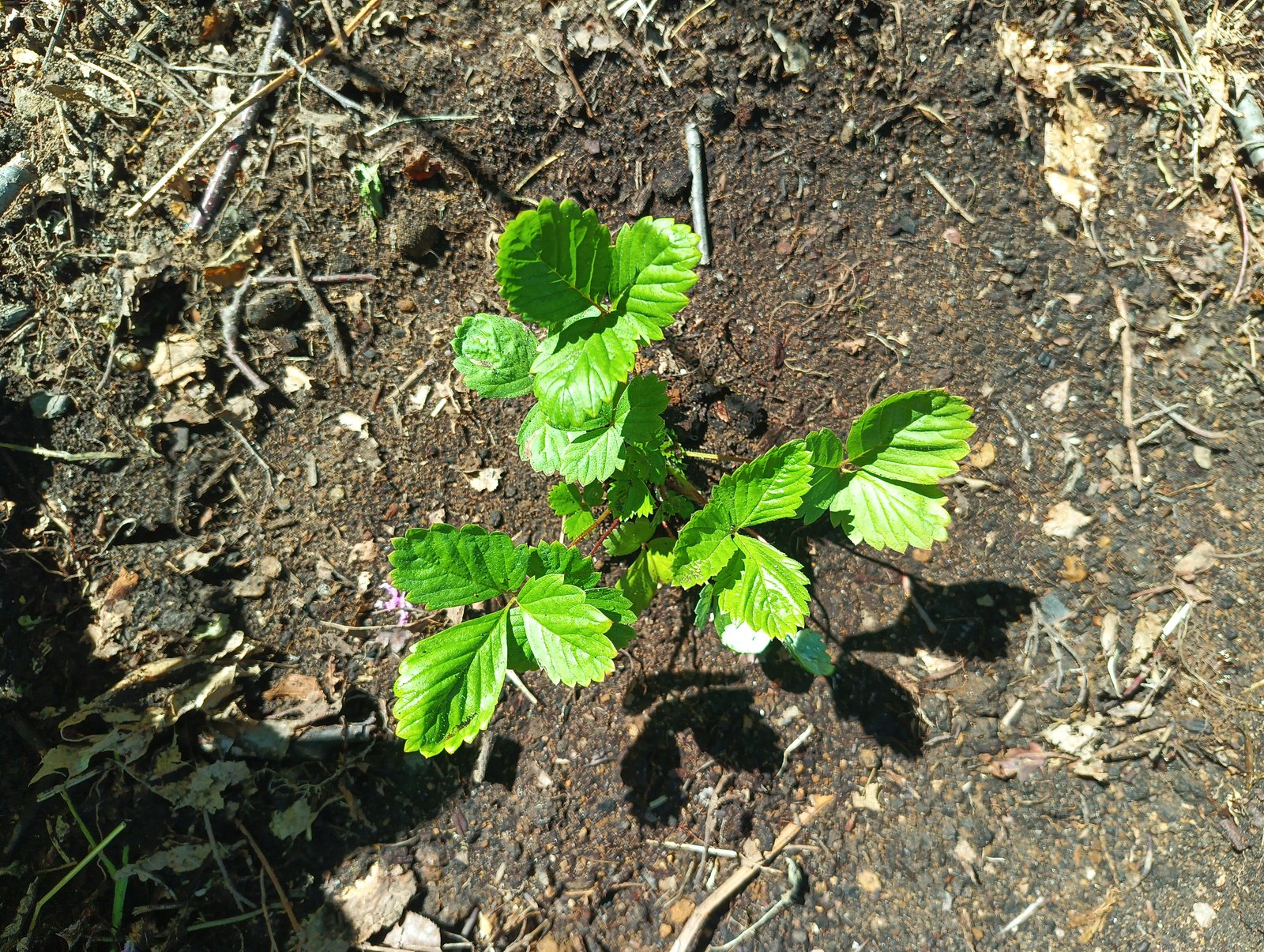
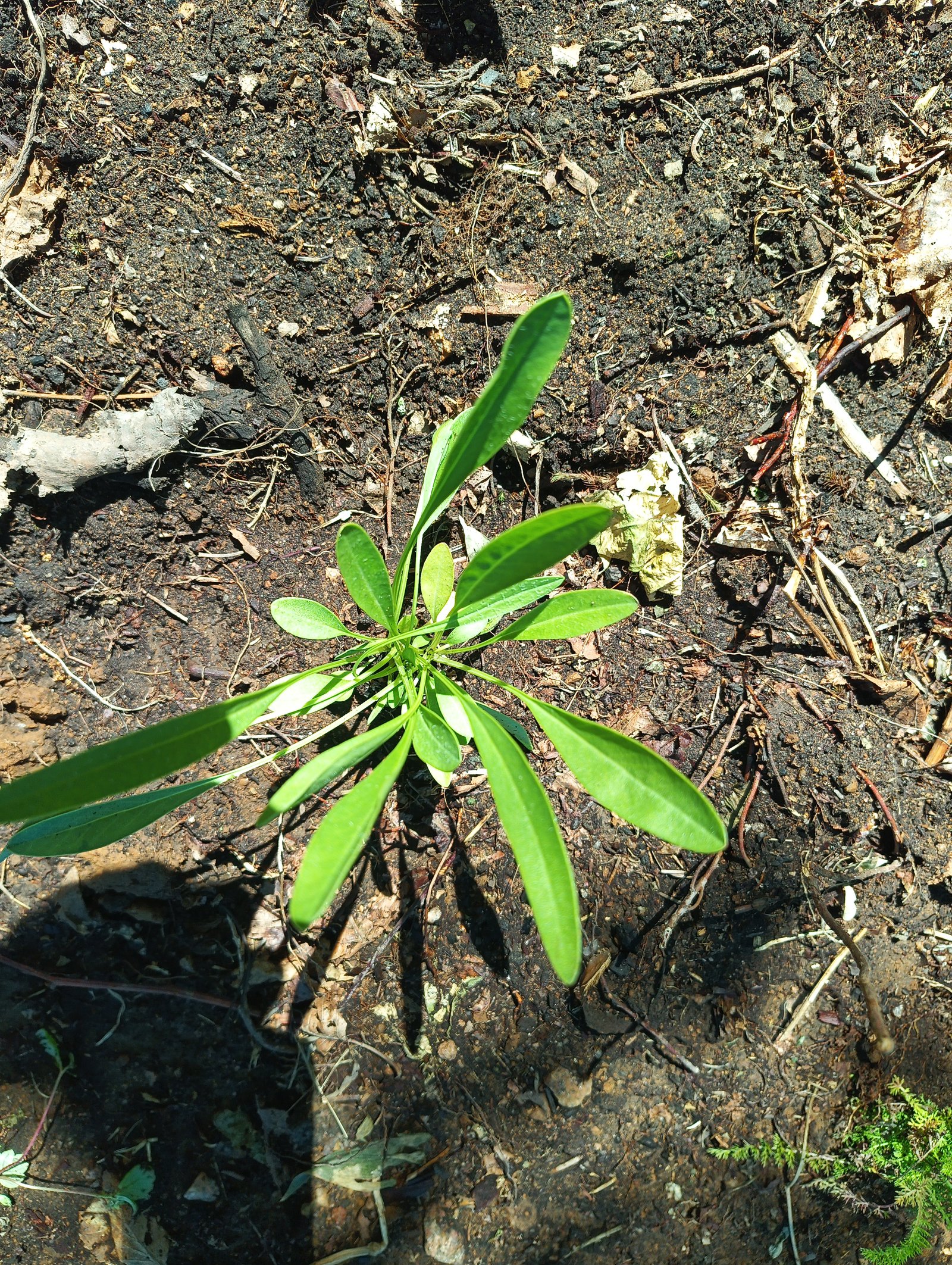
Prairie dropseed and wild strawberry are planted densely across the steep bank to prevent erosion, forming the groundcover matrix that holds the soil while the rest of the community establishes. Asters, coreopsis, yarrow, and black-eyed susan provide a colour sequence from spring through fall. The layers bloom in succession — serviceberry flowers before leaves emerge in early spring, dogwood and chokeberry follow in late spring, ninebark adds to early summer, and the asters carry the display into October.
Click any plant to see its photo, rationale, and growing details.
June 2026